
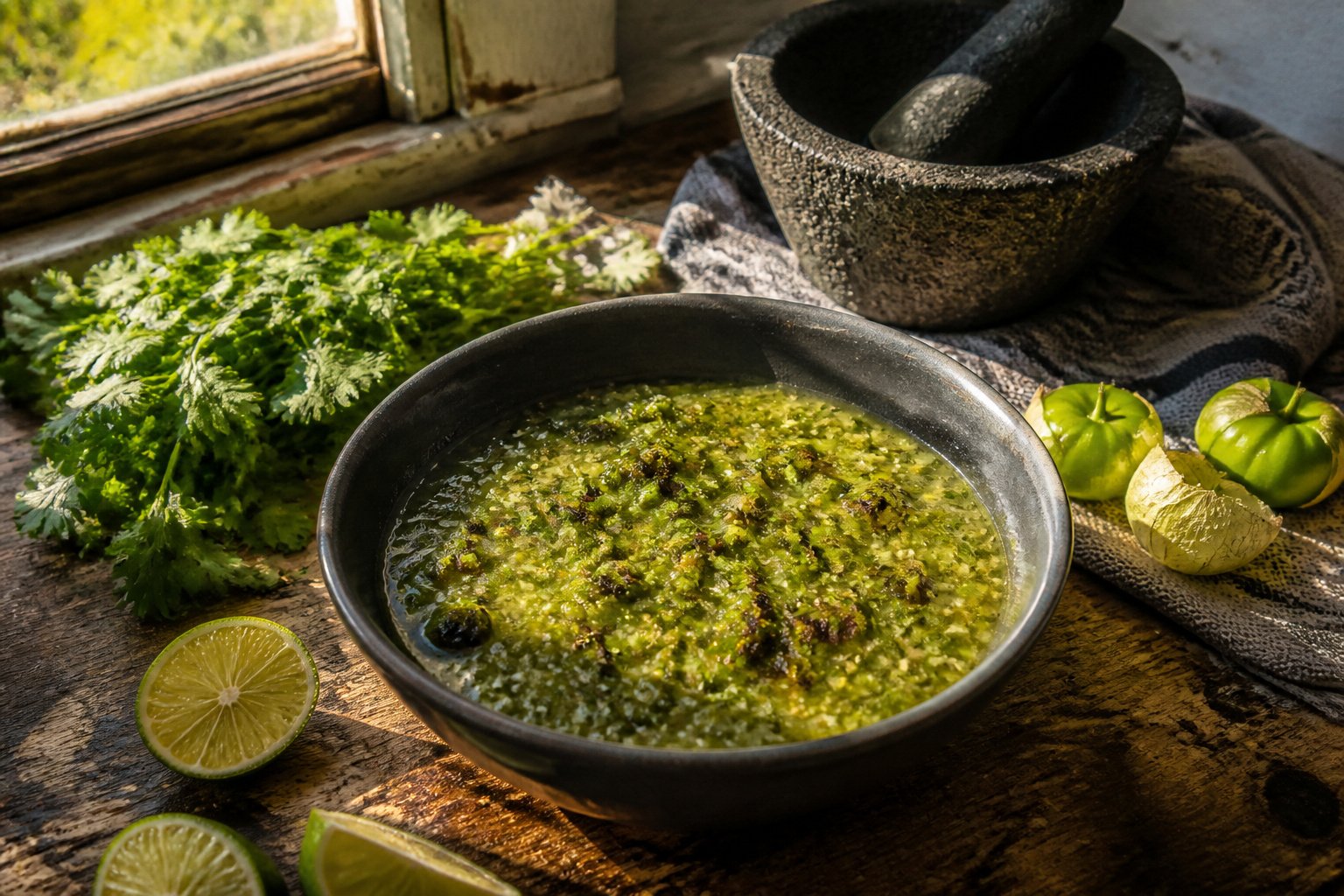
Roasted tomatillo salsa verde tastes like bright citrus wrapped in quiet smoke, and the char you build under the broiler is what separates it from anything that comes in a jar.
The whole thing takes about twenty minutes of actual work, but only if you skip the oil most recipes call for. The tomatillos release enough liquid on their own, and leaving them bare lets the char concentrate where it lands.
What This Salsa Is and When to Make It

Roasted tomatillo salsa verde lands somewhere between a condiment and a necessity in my kitchen.
The tomatillos bring a sharp, citrusy tang that softens into something almost fruity once they’ve blistered under the broiler, and the charred skins add a quiet smoke that bottled green salsa never quite captures.
Garlic and jalapeño round it out without overwhelming; this is bright food, not aggressive food.
I reach for it on weeknights when tacos need something more than sour cream, and again on weekend mornings when fried eggs look lonely. It works with chips and a beer, obviously, though that barely counts as cooking.
The whole thing demands about twenty minutes of actual attention, and every ingredient comes from a standard grocery store. No produce run to a specialty market, no hunting down obscure chiles.
The heat level sits at medium at most; one jalapeño with seeds removed keeps it polite for kids, and the texture stays looser than a thick pico, closer to a pourable sauce you’ll spoon rather than scoop.
Recommended Products
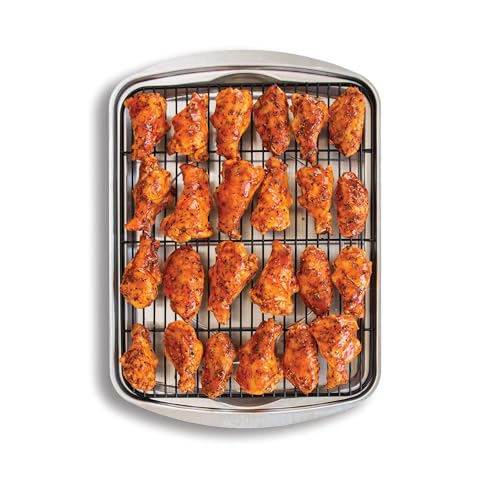
Great for making a variety of delicious treats like bacon, jerky, dried fruits, crisp fries, veggies and more

CRISPY BAKING SHEET SET: Ensure crisp results every time in the oven. This 15 x 10.5-inch nonstick baking pan and wire rack is great for crisping bacon, chicken, wings, fries, chips, and much more
Naturals bakeware is made of pure aluminum for superior heat conductivity and produces consistently evenly browned baked goods every time.
Ingredients

Tomatillos come in papery husks that slip off easily under running water; the sticky film underneath rinses away in seconds. For this batch you’ll need:
- 1.5 pounds tomatillos, husks removed and rinsed
- 1 medium white onion, halved through the root
- 4 garlic cloves, left in their skins
- 2 jalapeños or 1 serrano, stems on for now
- 1/2 cup fresh cilantro, roughly chopped
- 2 tablespoons fresh lime juice
- 1 teaspoon salt
- 1/2 teaspoon ground cumin (optional, but I like the warmth)
A few sources call for oil to help the vegetables roast, though most skip it.
The tomatillos release enough liquid to keep things from scorching on a hot pan, so I leave it out and let the char concentrate where it lands.
Recommended Products

One (1) 15.5 oz jar of Late July Snacks Salsa Verde with Roasted Tomatillos

Simple Ingredients, Big Flavor: No preservatives. No artificial anything. Just hand-crafted, locally sourced, all-natural salsa with the kind of ingredient list you'd write yourself.

Includes one 16-ounce jar of FRONTERA Gourmet Mexican Tomatillo Medium Salsa
Method

- Preheat your broiler with the rack about 4 inches below it, or set the oven to 450°F if roasting is easier. Either way works.
- Husk the tomatillos and rinse off the sticky film. Halve a white onion, leave the garlic cloves in their skins, and stem the peppers. The garlic skins protect it from burning.
- Spread everything on a baking sheet and roast 12 to 18 minutes under the broiler, or 15 to 22 minutes in the oven. You want charred skins and collapsed, softened flesh; that depth is what makes this worth doing.
- Let the vegetables cool for about 5 minutes. The garlic will squeeze right out of its papery skin now.
- Transfer the roasted vegetables to a food processor with fresh cilantro, lime juice, salt, and cumin if you like it. Pulse until the texture looks right to you.
- If the salsa sits too thick, thin it with a tablespoon of water at a time. If it runs thin, more tomatillo flesh is the fix, though a slightly loose salsa is normal while warm.
- Taste and adjust. More salt usually helps, more lime brightens it, and keeping some pepper seeds in the mix dials up the heat.
Yield and Storage

This batch yields about 2 cups of salsa, enough for a dinner and leftovers or a small party.
Stored in a sealed container, it keeps in the refrigerator for 5 to 7 days. The pectin in the tomatillos does its work as it chills, so expect the texture to thicken.
A quick stir loosens it back up; if you want it thinner, a splash of water or a brief warm-up on the stove does the job.
For longer storage, the freezer is your friend. Spoon it into freezer-safe containers with about a half inch of headspace, since it expands as it freezes.
It holds well for up to 3 months. Thaw it overnight in the refrigerator, and don’t worry if the oil separates; it stirs right back in.
Recommended Products

BROILER KING: This porcelain-coated broiler pan for oven nonstick wont warp or flake it's coating and will withstand the high temperatures of the broiler
GENUINE OEM QUALITY: Whirlpool Genuine OEM broiler pan is designed for compatible ranges and ovens to help support proper fit, dependable performance, and the quality standards your appliance was built for

PERFECT SIZE FOR SMALL MEALS: Compact 10x7 inch pan ideal for single servings, small batch baking, and reheating; fits most standard toaster ovens; great for cooking meals for 1-2 people
Peppers and Heat

A jalapeño and a serrano look almost identical on the cutting board, but the serrano runs sharper and grassier, with roughly five times the heat.
For a milder salsa, remove the seeds and the white pith they cling to, called the placenta, which is the hottest part of the pepper. Use a spoon to scrape it all out, and wear gloves while you work.
One jalapeño usually keeps things gentle; if the first batch tastes tame, add a second. Roasting mellows the heat slightly, so even a serrano loses some of its bite after blistering under the broiler.
For the cautious, skip the serrano entirely and build up from a single jalapeño.
Recommended Products

Tomatillo salsa with green tomatoes, onions, cilantro, jalapeños, green peppers and lime juice

Mild salsa verde with a mouthwatering, tangy-sweet taste. Pair with meat dishes or make it your go-to dip for tortilla chips.

Mild taco sauce
Substitutions and Variations

Red onion steps in cleanly for white when you want less bite; the sweetness comes through more after roasting and won’t fight the tomatillo’s tart edge. I’ve started keeping both on hand just for this swap.
For a creamier salsa verde, blend in one or two ripe avocados after roasting. The fat smooths out the char without muting it, though the batch needs using within two days before browning sets in.
More garlic is an easy dial to turn, and roasted garlic especially plays nice here; it loses its raw heat and adds a deeper, almost sweet note that still reads clearly as garlic.
Some cooks omit cumin entirely, wanting the tomatillo and chile to carry the salsa alone. That choice reads cleaner, though I like the warm backing note cumin provides.
A handful of raw tomatillo tossed in at the end brightens the acidity back up if the roast went darker than intended.
Canned tomatillos do not roast well. The texture collapses and the flavor flattens out under high heat, so this method really needs fresh.
Recommended Products

Our popular natural aluminum quarter sheet with a nesting, oven-safe and nonstick steel grid

Two-piece broiler pan: set features a perforated top rack that maximizes heat circulation; ensuring even cooking and a crispy finish; while the bottom drip pan catches excess oil and juices; reducing smoke and preventing burning - perfect for grilling steaks; chicken; fish; and vegetables
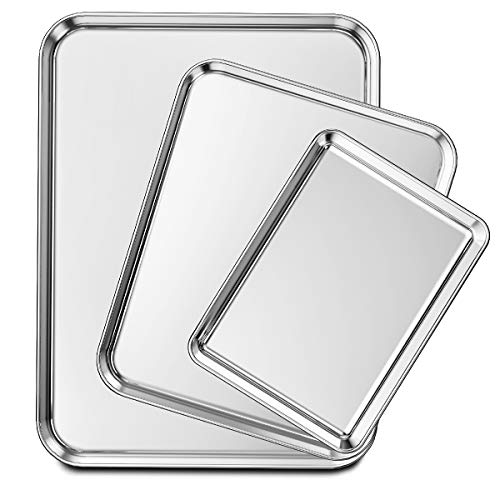
MORE WAYS TO USE: The stainless steel baking sheet set includes 3 different sizes of baking sheets which designed for high performance,15.8 x 12 x 1 inch, 12.25 x 9.65 x 1 inch, and 9.37 x 7 x 1 inch. A great replacement of aluminum pans, fits most regular toaster ovens, meet most of your daily baking or roasting needs, also good to be used as serving tray, cookie sheet and more
What I Serve It With

A thick corn chip dragged through a warm bowl of this salsa is still my favorite way to finish the batch, though the jar rarely lasts past the first sitting.
Fried eggs on Saturday morning get a spoonful straight from the fridge; the cold shock against the yolk is half the point.
Grilled chicken thighs are where the char from the broiler meets the char from the grill and the whole thing tastes like someone planned it that way.
Black bean tacos on weeknights, chilaquiles when the stale bag of chips revolts, rice bowls when there’s nothing else in the house and dinner still needs to happen in twenty minutes.
What I skip is delicate fish. The salsa’s acid and smoke flatten anything subtle; a piece of sole or tilapia ends up tasting only of tomatillo and regret.
Save the mild fillets for butter and lemon.
Recommended Products


Smoky salsa with a kick of medium heat. Pair it with meat or make it your go-to dip for tortilla chips.

Smoky, sweet taste from a blend of flavorful tomatillos, cilantro, lime, onion and jalapeño pepper.
Frequently Asked Questions
How long does salsa verde last in the fridge?
Homemade roasted tomatillo salsa verde keeps for 5 to 7 days in a sealed container in the refrigerator. The texture thickens as it chills because of the natural pectin in the tomatillos, but a quick stir loosens it back up.
Can I freeze salsa verde?
Yes, it freezes well for up to 3 months. Spoon it into freezer-safe containers with about a half inch of headspace, since it expands as it freezes.
Thaw it overnight in the refrigerator, and stir back in any oil that separates.
Can I can this salsa verde?
This recipe as written is not tested for safe canning. The acidity and proportions would need adjustment to meet USDA guidelines for water-bath canning.
For longer storage, freezing is the safer and simpler option.
Is it better to roast or boil tomatillos for salsa verde?
Roasting gives you charred skins and a quiet smoke that boiling never produces, plus a softened, almost fruity depth from the blistered tomatillos.
Boiling keeps things brighter and tangier, but the caramelized sweetness and concentrated flavor of roasting is what sets homemade salsa verde apart from the jarred kind.
Should tomatillos be roasted before making salsa?
Roasting is worth the extra few minutes for the depth it adds.
The collapsed flesh and concentrated char create a flavor you cannot get from raw tomatillos, and the broiler or a hot oven does the work while you prep the other ingredients.
Is roasted tomatillo the same as salsa verde?
Roasted tomatillo is the main component of this style of salsa verde, but the finished salsa also includes roasted onion, garlic, chiles, cilantro, and lime. Not all salsa verde is roasted; some recipes call for raw or boiled tomatillos instead.
About The Author
