
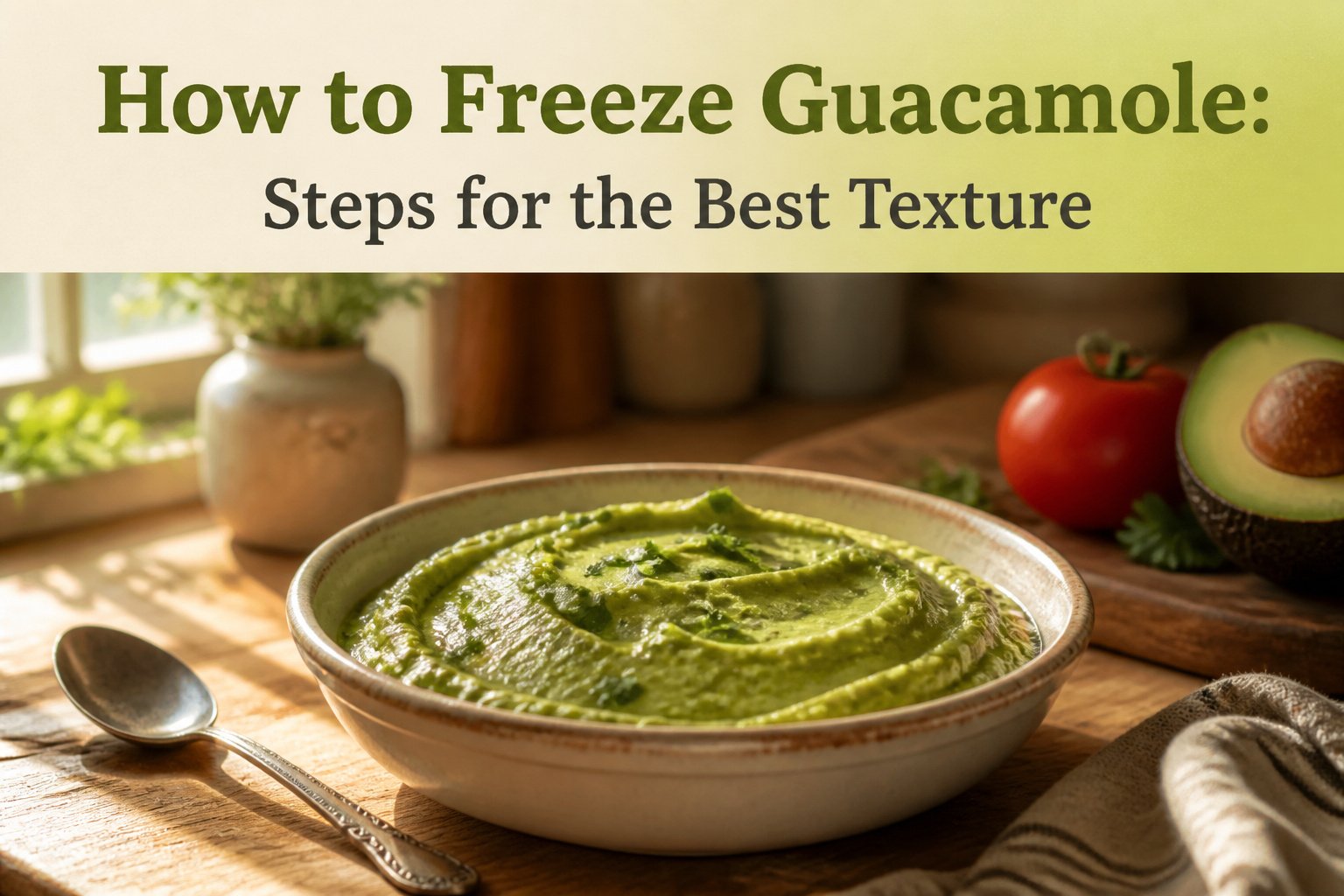
You can freeze guacamole for up to three months with good texture, but only if you start with a smooth lime-doctored puree and hold the tomatoes, onions, and dairy until after thawing.
I use one tablespoon of fresh lime juice per two avocados, blended completely smooth before any salt or seasoning goes in, because hidden lumps oxidize into brown spots no stirring fixes later.
1. Puree Avocado With Lime Juice

Ripe avocados matter here more than almost anything else. Rock-hard ones will never smooth out, and overripe ones turn bitter fast.
I halve them, pit them, and scoop the flesh straight into a food processor or blender.
Puree the avocado completely smooth, not chunky, because any lump still hiding its own core will oxidize anyway and leave you with brown spots after thawing. Fresh lime juice goes in next.
The standard ratio I have seen is roughly 1 tablespoon lime juice per 2 avocados, though I tend to add a little more because I like the brighter edge it gives.
The acid does two jobs: it keeps the color green through the freezer months, and it helps the puree freeze evenly without the icy pockets that plague rougher textures.
Only after this base is silky and fully doctored with lime do I think about salt or anything else. Chunky guacamole loaded with tomatoes and onions beforehand freezes into a watery, separated mess, so this step stays minimal on purpose.
Recommended Products
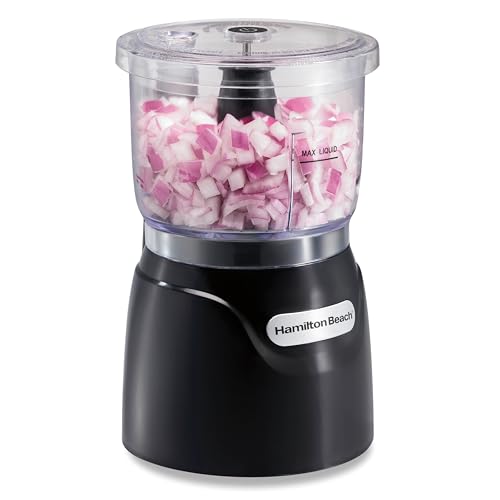
Simply stack and press to chop: The patented stack & press design makes it easy to assemble and use. Simply press the lid to chop and release to stop. Since all you do is stack the lid on top of the bowl, no difficult twist-locking is needed.

POWERFUL PERFORMANCE: Equipped with a 1000-peak-watt motor, this Ninja food processor effortlessly handles tough ingredients, ensuring smooth and consistent results every time.

Built-in bowl scraper saves time. Quickly process ingredients without stopping to use a spatula. Simply move the scraper from side-to-side to scrape the bowl while the food processor is running or the power is off — no need to remove the lid.
2. Add Salt and Herbs, Hold the Vegetables

Salt, cilantro, and a pinch of cumin can go into the guacamole before it hits the freezer. Those seasonings hold their character through the cold months without issue.
Tomatoes, onions, and any dairy need to stay out until after thawing. Water-heavy vegetables turn mushy and weepy once ice crystals rupture their cell walls, and dairy separates into grainy, unappetizing curds.
I learned this with a batch that looked perfect going in but came back soupy around the edges, the tomato water pooling while the avocado turned an odd, mealy texture. The simple base, avocado with lime and salt, freezes clean.
Fresh ingredients stirred in after thawing taste brighter anyway.
Recommended Products
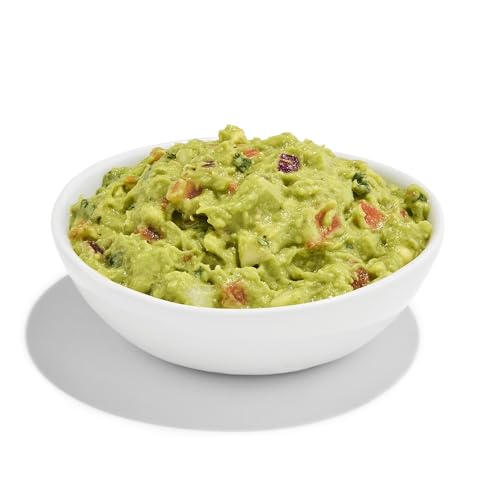
Selected and stored fresh

CONTEMPORARY DESIGN: Conveniently mix your favorite beverage recipe right into its 20oz travel cup featuring an easy drinking lid handle.

Blend delicious smoothies, thick milk shakes, hearty protein shakes and more
3. Portion and Freeze Flat

Small portions thaw faster, and that alone changes how frozen guacamole fits into a weeknight. Ice cube trays work for single servings, though half-cup containers suit my family’s taco nights better.
Each portion goes into something airtight, a ziplock bag or a lidded container, with every pocket of air pressed out before sealing.
Bags have one advantage jars do not: they freeze flat. Lay them in a single layer on a freezer shelf until solid, and afterward they stack like tiles, taking almost no room.
Jars can be reused, but they demand an inch of headspace for expansion and still eat more space than a flattened bag. For the bags, a corner snipped off later makes the guacamole easy to squeeze out without mess.
Label the date. Three months is the practical limit for quality, even if six months passes before anything actually spoils.
Recommended Products

Food Grade Safe: Made of extra thick food-grade PE material and passed certified test to ensure the reusable bags are PVC, BPA, Chloride, and Lead free. They can be used as flat bags or stand up bags thanks to the special foldable bottom design, and are much more lightweight & portable than silicone food storage bags. Perfect reusable food storage bags in home & kitchen or on the go.

The information below is per-pack only

🔹 One Box, All the Sizes You Need — 260 Bags, 4 Smart Options. Includes 90 snack, 70 sandwich, 60 quart, and 40 gallon bags — a perfectly balanced mix for meal prep, freezer storage, travel, and pantry organization. One space-saving box, endless uses
4. Thaw Overnight or In Cold Water

Move frozen guacamole to the refrigerator the day before you need it. The slow drop in temperature lets the texture settle evenly without weeping or separating.
For same-day use, submerge the sealed bag in cold water for a couple hours. The cold tap runs about 50–55 degrees, enough to pull the chill without inviting bacteria.
A bowl on the counter works; just weight the bag so it stays fully under.
Never microwave. The edges cook while the center stays frozen, and the texture never recovers.
You end up with warm, oxidized mush around a hard lump, which no amount of stirring fixes. The refrigerator or the cold water bath are the only two paths worth taking.
Recommended Products

Contains (1) ProKeeper Fresh Guacamole ProKeeper with a green airtight lid

Press-fit lid protects guacamole from air and prevents browning for days

Fresh Keeper can keep guacamole, salsa, dip fresh for up to a week
5. Stir In Fresh Ingredients After Thawing

Thawed guacamole needs a little help to look its best. The base turns slightly darker and softer than the batch you made fresh, which is normal after freezing.
A quick stir and sometimes a drizzle of olive oil brings back the sheen and loosens the texture enough to feel like itself again.
This is the moment to fold in anything you held back. Diced onion, chopped tomato, a spoonful of sour cream if that is your style.
Either order works: stir the thawed guacamole first, or add the fresh ingredients first. I stir the base back to life, then fold in the fresh stuff so the flavors stay distinct.
I also taste and adjust salt here. Freezing dulls seasoning slightly, so what tasted right yesterday may need another pinch today.
A few drops of hot sauce can wake things up too, if the guacamole still seems flat after the olive oil and stir.
Recommended Products

EASY RELEASE ICE CUBE TRAY: Independent cavity design makes releasing large ice cubes extremely convenient. Non-stick silicone surface ensures big ice cubes slide out smoothly without sticking. The soft silicone material makes it easy to push whiskey ice cubes out from the bottom.

Prepare portioned meals easily: Each compartment of the silicone freezer tray features clear 1/2Cup/1Cup, 125ml/250ml fill mark, perfect for freezing soups, casseroles, lasagna, leftovers and more dishes.Makes weekly meal prep or pet food portioning a breeze
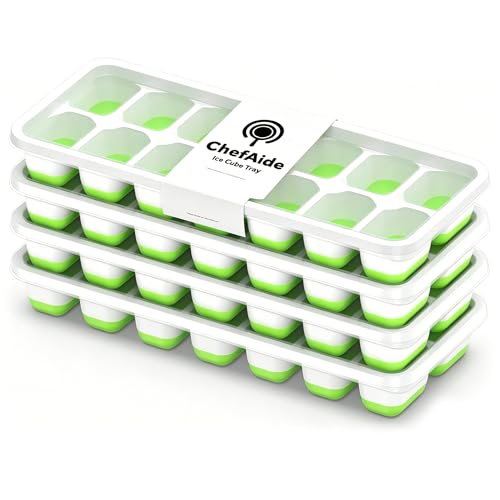
Generous Ice‑Making Capacity: The set includes 4 ice cube trays. Each tray makes 14 ice cubes at a time, delivering up to 56 ice cubes in total when all four are used together.
How Long Frozen Guacamole Keeps

Frozen guacamole keeps its best quality for 3 to 6 months. Beyond that window it stays safe to eat, but the flavor flattens and it can start to pick up the stale taste of whatever else is sharing the freezer space.
I write the date on every container before it goes in. After about 4 months, that guacamole gets redirected toward quesadillas or burrito bowls rather than a chip dip where the fresher texture and brighter flavor actually matter.
The freezer burn or slight browning that might show up at month five is less of a problem melted into hot cheese than it would be on a naked tortilla chip.
Recommended Products
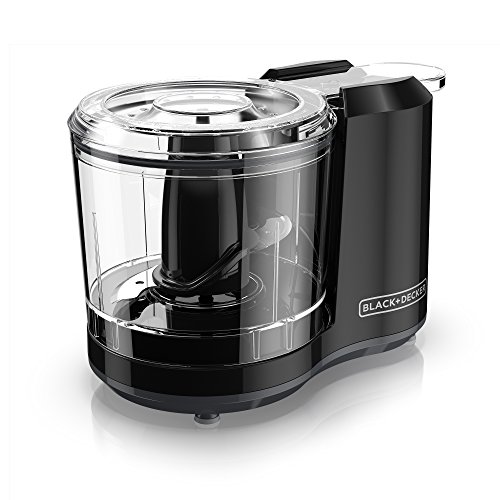
1.5-CUP CAPACITY - 1.5 Cup chopper is perfect for small jobs; enjoy fresh chopped herbs, bread crumbs, fruits and veggies, chocolate and more
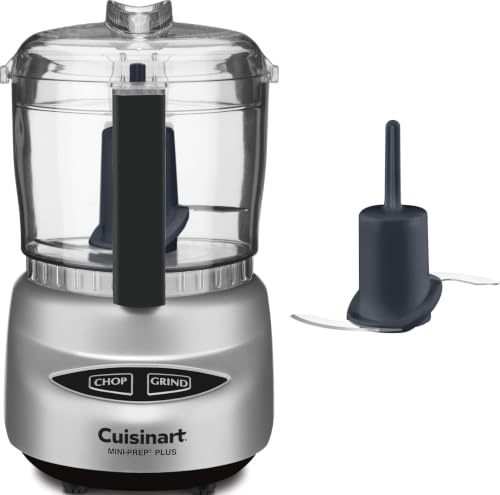
SUPERIOR FUNCTION: The Cuisinart Mini-Prep Plus Food Processor offers an efficient 250-watt motor and patented reversible stainless steel blade to quickly chop herbs, dice vegetables, and grind hard cheese
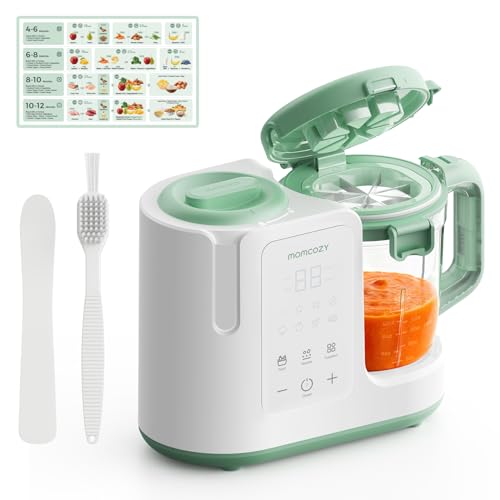
𝟑-𝐌𝐢𝐧𝐮𝐭𝐞 𝐏𝐫𝐞𝐩, 𝐈𝐭 𝐇𝐚𝐧𝐝𝐥𝐞𝐬 𝐭𝐡𝐞 𝐑𝐞𝐬𝐭 - Spend just 3 minutes prepping — the Momcozy Baby Food Maker automatically steams and blends in 18–25 minutes. No food transferring needed. For frozen ingredients, extend the duration in Auto Mode. Making fresh, healthy baby puree has never been easier.
What Not to Freeze

A batch of guacamole loaded with diced tomatoes and onions can look perfect going into the freezer, but the thaw tells a different story. Tomatoes turn mealy and release water that pools at the bottom of the container.
Onions soften past the point of texture and take on a bitter edge that no amount of lime can cover. Jalapeños fare no better, losing their snap and bleeding heat unevenly through the base.
Dairy is the other dealbreaker. Sour cream or yogurt separates into grainy curds once frozen, and any cheese you folded in breaks into rubbery flecks.
The result looks curdled even when it is still safe to eat.
The fix is straightforward. Freeze only the avocado base mashed with lime juice, salt, and maybe a little cilantro.
That mixture holds steady for six months or more. When you are ready to serve, thaw it overnight and build fresh from there.
Chop new tomatoes, dice a new onion, and stir in the dairy then. The five minutes of extra prep buys back the texture that freezing would have stolen.
Texture Changes to Expect

Thawed guacamole browns slightly and loses some of its fluffy lightness. The color shift comes from oxidation, the same process a cut apple faces.
Lime juice slows it but does not fully stop it, especially across weeks in the freezer. That darker tint looks alarming, yet it signals nothing about safety.
The dip is still fine to eat.
The texture change is harder to fix. Ice crystals form in the avocado fat during freezing, and once they melt, the guacamole turns denser than when it was fresh.
A vigorous stir with a fork revives it partially, working air back in and recombining any separated liquid. A tiny drizzle of olive oil or a splash of hot sauce helps if it seems too stiff.
It will never quite match the day it was made, though. For that peak texture, fresh guacamole still wins.
Store-Bought Guacamole

Packaged guacamole is a mixed bag for freezing. Some brands build their recipe with enough lime and stabilizers to survive the cold, while others fall apart into gray, watery mush once thawed.
The difference usually sits right on the label, if the manufacturer bothered to address it at all. Before you commit a tub to the freezer, check the brand’s site or packaging for explicit freezing guidance.
Products with higher acid content and added stabilizers tend to fare better, since lime juice slows the oxidation that turns avocados brown and stabilizers help the emulsion hold through ice-crystal formation.
One major grocery-store brand in my rotation freezes respectably; another, nearly identical in price and placement, turned an unappetizing shade of slate and wept liquid the day after thawing.
If the label stays silent on freezing, assume the risk is yours.
Recommended Products

2-cup container and lid is the perfect airtight solution for keeping guacamole longer

Extended Freshness: This dishwasher safe guacamole storage container keeps guac and other dips fresh all week long; Its 4-cup capacity fits about 4 to 5 avocados worth of guacamole; Press down on the lid to ensure long-lasting freshness

[Health and safety]:The baby food containers and lid are made of food-grade silicone and are free of any BPA, BPS, PVC, phthalates, lead, latex, nitrosamines and other harmful substances that can leach into baby's food.
Frequently Asked Questions
Recommended Products

EASY TO PORTION: Each tray features four sections with clear measurements (250ml/1-cup and 125ml/ ½ cup), allowing you to prepare and freeze perfectly portioned servings. With the soup freezer tray, you can have several types of soup freezer cubes ready to use. Freezer soup containers makes freezing and storing single servings easy.

Food-Grade Material - This ice cube tray with lid is made of food grade silicone and plastic, assuring these trays are durable and reusable.

FROM FREEZERS TO OVENS - Make your kitchen more efficient with this silicone ice cube tray with lid! Great for bone broth servings, recipes, meal prep, and portion-controlled meals,Aside from freezing soup, it can also be used for baking. It can withstand temperatures from minus 8 to 428 degrees Fahrenheit
Can you freeze store-bought guacamole?
Yes, but check whether your specific brand is suitable for freezing. Some manufacturers build their recipes with enough lime and stabilizers to handle the cold, while others turn gray and watery once thawed.
If the label says nothing about freezing, assume the risk is yours.
How long can you keep guacamole in the freezer?
Frozen guacamole keeps its best quality for three to six months. It stays safe to eat beyond that, but the flavor flattens and it can pick up stale tastes from neighboring freezer items.
Write the date on every container before it goes in.
What happens if you freeze guacamole?
It browns slightly and loses some of its fluffy lightness, though it remains safe to eat. Ice crystals form in the avocado fat during freezing, and once melted the texture turns denser than fresh.
A vigorous stir and a drizzle of olive oil help bring it back.
How do you freeze avocados without turning brown?
Puree ripe avocados with plenty of lime juice before freezing. The acid acts as a shield against oxidation, keeping the color green through months in the freezer.
A ratio of about one tablespoon lime juice per two avocados works as a baseline.
What is the best way to preserve guacamole?
Freeze only a simple base of pureed avocado, lime juice, salt, and maybe cilantro. Hold back tomatoes, onions, dairy, and other water-heavy ingredients until after thawing, since those turn mushy or separate in the freezer.
Portion into small airtight bags, press out all air, and freeze flat.
Is guacamole good after being frozen?
It is good enough for quesadillas, burrito bowls, and similar uses, though it never quite matches fresh guacamole for chip dipping. The base turns slightly darker and softer, and freezing dulls seasoning a bit.
Stir in fresh ingredients after thawing and adjust salt to bring it back to life.
About The Author
