
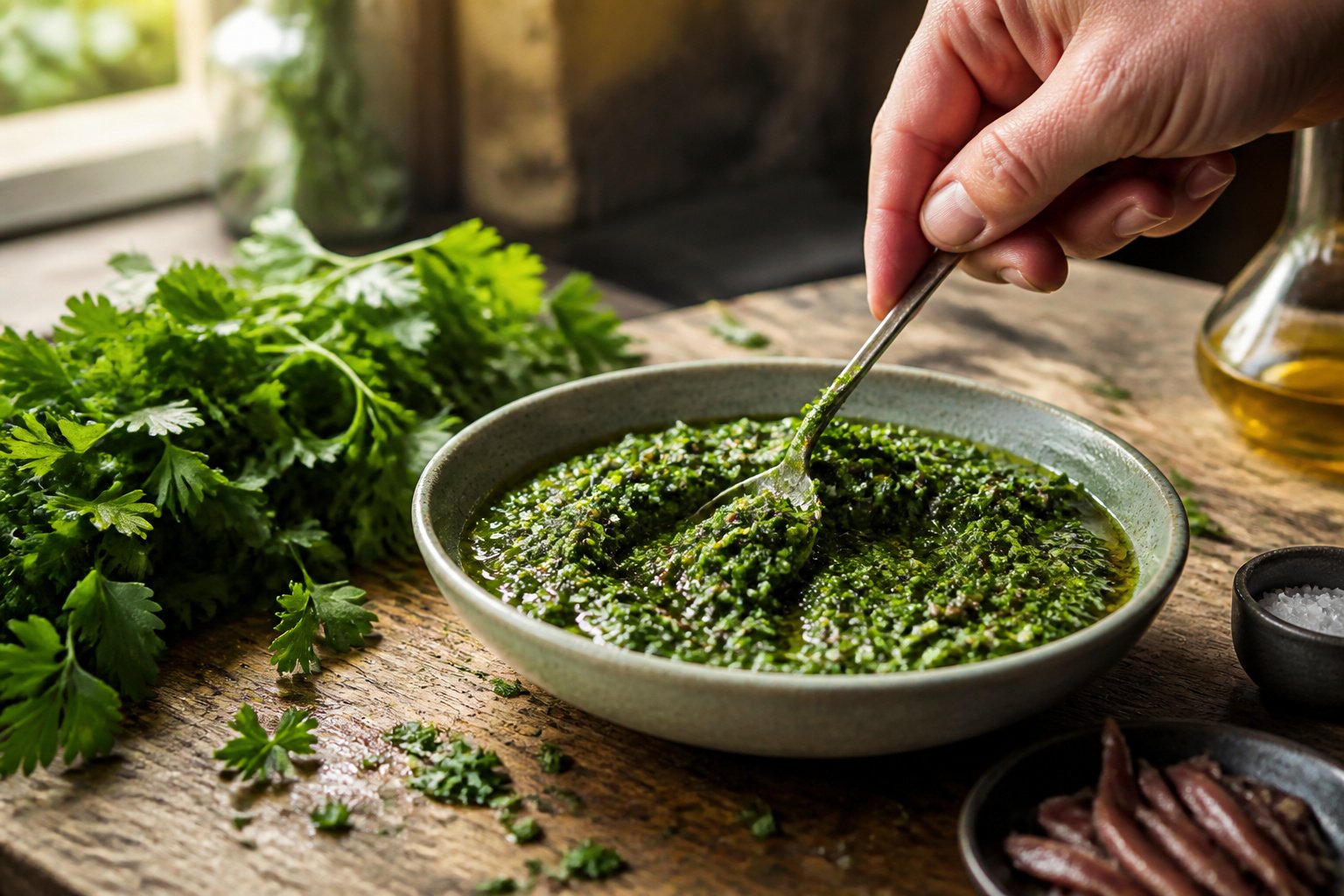
Bright, bracing, and aggressively green, this Italian salsa verde recipe takes fifteen minutes and no stove. The anchovy is what separates it from a dozen other herb sauces, dissolving into something you can’t quite name.
I keep both anchovy and vinegar as options because the sauce works either way, but it does not taste the same: without it, brighter and more purely herbal; with it, complex enough that you stop thinking about anything else on the plate.
One bunch of parsley yields about two cups chopped, enough for a couple of dinners or a very good sandwich.
What This Sauce Actually Is

Italian salsa verde is a raw herb sauce, not the cooked tomatillo salsa you might grab with chips. The base is chopped parsley, sharpened with capers, garlic, lemon, and olive oil, with anchovies in most versions for depth.
It sits somewhere between a fine pesto and a rougher chimichurri, depending on whether you chop by hand or use a processor.
I make this when grilled meat or fish needs something bright, or when roasted vegetables look plain on a Tuesday night.
Ten to fifteen minutes of prep yields roughly a scant cup, enough to spoon over a couple of dinners or keep in the jar for sandwiches.
No cooking means no extra pans, which matters when the stove already holds the main event.
Recommended Products

Item Package Length: 2.54cm


Ingredients

A good salsa verde starts with parsley you actually want to chop. One bunch yields about 2 cups chopped, enough to cover a full cutting board and smell up the kitchen in the right way.
- 1 bunch parsley, finely chopped (roughly 2 cups)
- 1 tablespoon capers, drained and minced so they disappear into the sauce
- 2 cloves garlic, minced
- 1 lemon, zested and juiced
- ½ teaspoon red pepper flakes, or more if you want heat that builds
- ½ cup extra virgin olive oil
- 4 anchovy fillets (optional, but this is where the recipe splits)
- 1 tablespoon red wine vinegar (optional)
The anchovy divide is real. Some versions lean on them for that savory depth you can’t quite name; others skip them entirely and let the capers carry the salt.
I keep both the anchovies and vinegar as options because the sauce works either way, but it does not taste the same. Without anchovy you get something brighter, more purely herbal.
With it, the sauce turns almost muddy in the best sense, complex enough to spoon onto grilled meat and not think about anything else.
Recommended Products

Salsa Verde is made with fresh tomatillos, onions, jalapeños and poblano peppers

10 calories per 2 tablespoon.

No hydrogenated fats or high fructose corn syrup allowed in any food
Method

- Strip the leaves from one bunch of fresh Italian parsley and discard the coarse stems. Chop the leaves until finely minced and transfer to a large bowl. The finer the chop, the thinner your sauce; a medium mince gives the most versatile result.
- Mince 2 cloves of garlic and 1 tablespoon of drained capers, then add both to the parsley. Keep these small so their flavor carries through every bite.
- Zest 1 lemon directly into the bowl, then juice it. Both the zest and juice go in; the zest adds a layer of aromatics that juice alone won’t give you.
- Add ½ teaspoon kosher salt, ½ teaspoon freshly ground black pepper, ½ teaspoon crushed red pepper flakes, and ¼ cup extra virgin olive oil. Stir until everything is incorporated.
- Taste and adjust. More salt, pepper, or red pepper flakes if needed. More olive oil if you want a thinner, more pourable consistency.
- Serve immediately, or let it sit so the flavors meld. It keeps refrigerated up to 5 days.
A food processor handles most of this in seconds, and that is a legitimate choice. I chop by hand for the control over texture and because the wrist work is part of the process for me.
The processor gives a more uniform, slightly looser sauce; hand-chopping leaves you with more variation and body.
Recommended Products

Roland Flat Fillets of Anchovies in Olive Oil are wild caught, sustainably sourced and carefully hand-packed in a simple blend of olive oil with salt to preserve the fish’s natural savory umami-packed taste.

Filet of anchovies in olive oil and salt
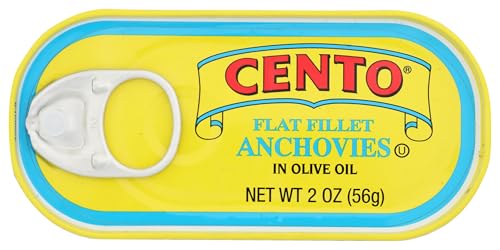
Anchovies
How I Use It

A batch of Italian salsa verde rarely survives two days in my kitchen, and not because it spoils.
The sharp, salty brightness works as a condiment for grilled steak or broiled fish straight out of the jar, and by day two I am folding it into scrambled eggs or swirling it into potato soup.
The same batch can thin with lemon juice into salad dressing one night and thicken a grain bowl the next, no extra work required.
Crusty bread dragged through the sauce is the obvious move, but the less obvious ones keep me making it.
Pressed into a sandwich with roast chicken, spooned over crispy smashed potatoes, or stirred hot into polenta, the sauce holds up because the olive oil carries the herbs without turning muddy.
For a mayo-free potato salad, toss warm boiled potatoes with salsa verde while they are still steaming; the heat wakes up the garlic and the potatoes drink in the oil.
I have learned to keep the jar within arm’s reach of the stove. That is where most weeknight dinners happen, and that is where the sauce gets used.
Recommended Products

Graza Drizzle Extra Virgin Olive Oil: A 100% extra virgin finishing oil made from olives that are picked early when flavor is bold and antioxidants are highest. Drizzle adds a big pop of flavor right before you dig in. 1 bottle / 500ml.

One 51 fluid ounce bottle of Extra Virgin Olive Oil, cold extracted

The Anchovy Question

Anchovies dissolve into the background of Italian salsa verde, adding umami depth without any fishy taste. Capers alone can carry a vegetarian version, but they lack the same savory punch.
If you skip the anchovies, you’ll need to compensate: a dash of Worcestershire sauce, a teaspoon or two of miso, or a spoonful of Dijon mustard each adds that missing savory layer.
None of these matches exactly, so taste and adjust salt afterward.
Raw garlic can dominate, which is why some cooks prefer shallots or scallions for a milder allium note. I keep garlic to one small clove when I’m using the food processor, since it can leave larger, biting pieces otherwise.
Dijon works as either a substitute or an add-in, giving the sauce a sharp edge that plays well against the grassy parsley. The boldness is the point here; this isn’t a sauce that benefits from restraint.
Recommended Products

Made with lemon juice, red bell peppers and herbs like basil & thyme

5-minute Sauce Mix with delicious flavors of lemon, herbs and butter
HEINZ DIPPING SAUCE: One 8 fl oz bottle of Heinz Greek-Inspired Garlic Herb Sauce
Storage

A tight-fitting container matters more than the material. The less air sitting above the salsa verde, the longer the parsley keeps its color and the capers don’t turn flat.
I press a piece of plastic wrap directly onto the surface if the jar is too tall, then seal the lid.
Refrigerated salsa verde keeps for three days, maybe five if you started with very fresh parsley and didn’t skimp on the olive oil. The oil forms its own seal, which helps.
After day two the herbs begin to darken at the edges; the sauce still tastes fine, but it looks tired on a plate.
Freezing is the better bet for longer storage. The oil will separate and the texture loosens, so thawed salsa verde works best spooned over hot food where it melts in anyway, not as a raw dip or dressing.
Freeze in small portions; a full jar thawed and refrozen turns murky.
Recommended Products

One 0.5 ounce package of Organic Parsley
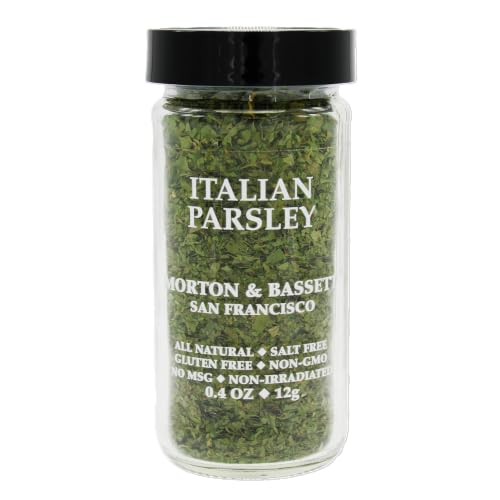
Our Commitment To Quality Is Clear

Herbs Bunched
Frequently Asked Questions
Recommended Products

BRIGHT & FRESH TOMATILLO FLAVOR – A smooth, tangy salsa verde with gentle jalapeño warmth and fresh cilantro, garlic, and lime.

BRIGHT & ZESTY WITH LAYERED HEAT – Tomatillo tang + jalapeño warmth + serrano sharpness + habanero citrusy fire.
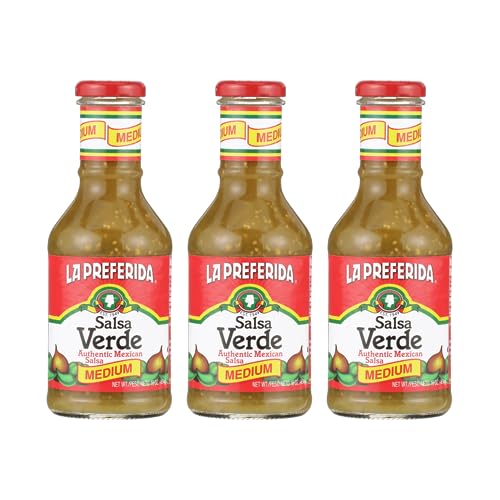
HOMESTYLE FLAVOR, MINUS THE HASSLE: Leave slicing and dicing to the pros. Our tangy tomatillo salsa captures authentic taste in the convenience of a bottle.
What is Italian salsa verde?
Italian salsa verde is a raw herb sauce built from chopped parsley, sharpened with capers, garlic, lemon, and olive oil, with anchovies in most versions for depth. It is not the cooked tomatillo salsa served with chips.
The consistency falls somewhere between a fine pesto and a rougher chimichurri, depending on whether you chop by hand or use a food processor.
What is the difference between Italian and Mexican salsa verde?
Both names translate to green sauce, but the ingredients are completely different.
Italian salsa verde is an herb-based sauce with parsley as the main ingredient, while Mexican salsa verde has a consistency like red salsa but uses tomatillos instead of tomatoes.
The Italian version is served as a condiment for meats and seafood, not eaten with tortilla chips.
Can you make salsa verde without anchovies?
Yes, but you will need to replace the umami depth they provide. A dash of Worcestershire sauce, a teaspoon or two of miso, or a spoonful of Dijon mustard each adds that missing savory layer.
Capers alone can carry a vegetarian version, but they lack the same punch. None of these substitutes matches exactly, so taste and adjust salt afterward.
Can you make salsa verde in advance?
Yes, and some cooks prefer to let it sit so the flavors meld. It keeps refrigerated up to five days in a tight-fitting container, though three days is the safer bet for color.
Press plastic wrap directly onto the surface if the jar is too tall, since less air above the sauce keeps the parsley green and the capers from turning flat.
For longer storage, freeze in small portions; thawed salsa verde works best spooned over hot food, not as a raw dip or dressing.
What are common mistakes when making salsa verde?
Using a food processor without watching the garlic is one; the blade can leave larger, biting pieces that dominate the sauce.
Skimping on the olive oil leaves the sauce flat and shortens refrigerator life, since the oil forms a seal that protects the herbs. Starting with tired parsley means the sauce darkens faster.
Freezing a full jar and refreezing what you do not use turns the sauce murky, so portion before freezing.
About The Author
