
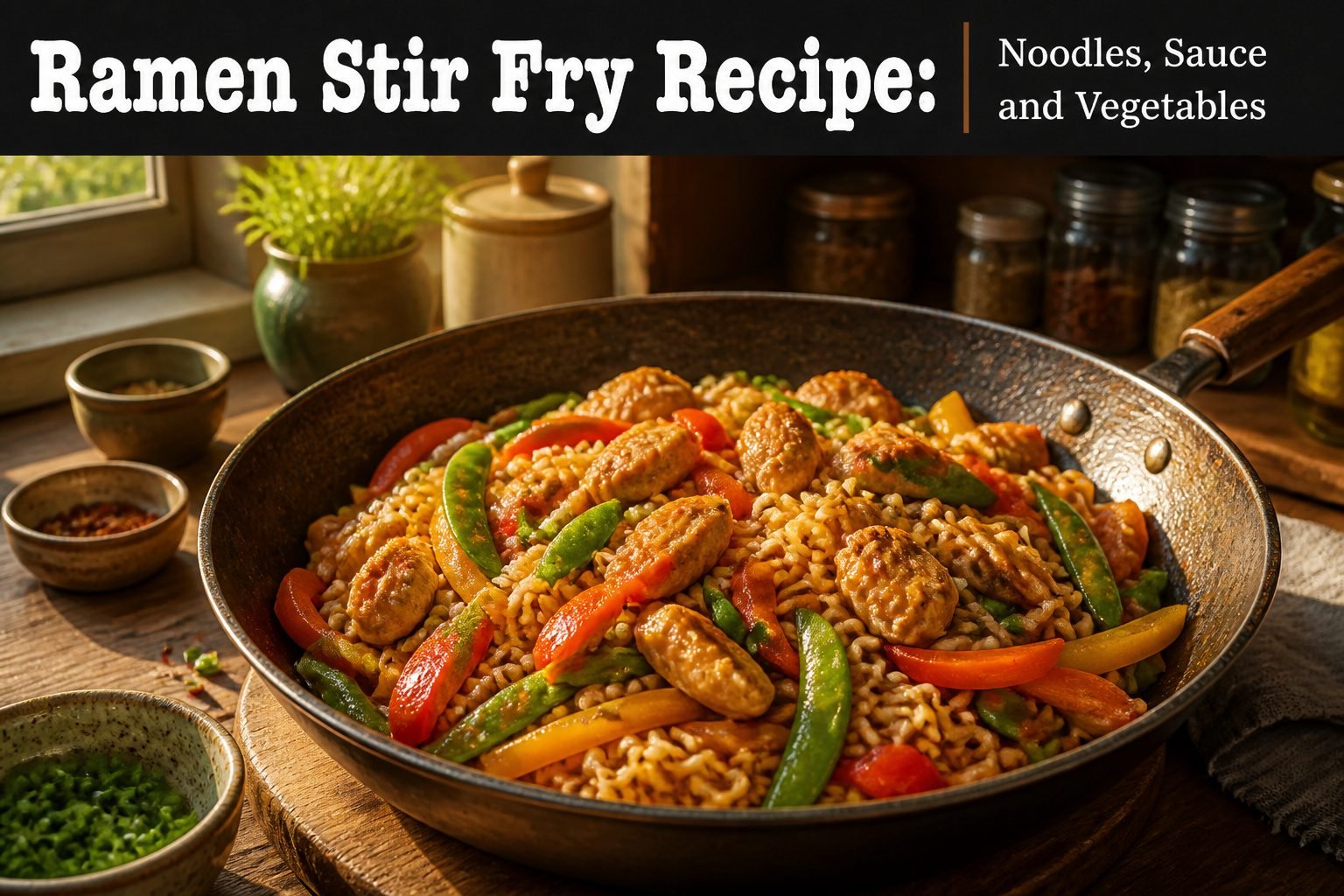
A ramen stir fry is a complete dinner built from instant noodles, a quick pantry sauce, and whatever vegetables or protein you already have.
The one condition that makes or breaks it is timing: the noodles must be pulled from the boiling water while they still have a slight resistance in the center, then rinsed cold so the hot pan can finish them without turning mushy.
The sauce of low-sodium soy sauce, sesame oil, honey, and rice vinegar gets mixed before anything hits the pan, because once the cooking starts there is no pause to measure.
Cook the Noodles Al Dente

Two (3.5-ounce) packages of instant ramen noodles form the base of this dish, and the seasoning packets go straight in the trash. The salt bomb inside them has no place here; the sauce you’ll build later carries all the flavor.
Bring a pot of water to a rolling boil and cook the noodles just until they bend without crunch, about a minute shy of what the package suggests.
They should still have a slight resistance in the center, since the hot pan will finish the job. Drain them immediately and run cold water over the strands until they feel cool to the touch.
That cold rinse does two things: it slams the brakes on carryover cooking, and it washes away surface starch that would otherwise glue the noodles together in one clump.
Shake the colander hard to shed excess water.
Wet noodles dilute the sauce and turn the stir fry soupy. Lay them out on a plate if you have time; ten minutes of air-drying buys you insurance against a watery finish.
Build the Stir-Fry Sauce

The sauce comes together in a small bowl while the noodles still sit in their package, and that timing matters more than it sounds. Once the pan is hot and the vegetables start softening, there is no pause to measure.
½ cup low-sodium soy sauce, 2 tablespoons sesame oil, 1 tablespoon honey, and 3 tablespoons rice vinegar form the base. Some versions add oyster sauce for depth, others a hit of Sriracha or a pinch of crushed red pepper.
The honey balances the salt and the sharp vinegar without making things sweet; sugar works if the jar is empty. Sesame oil goes in last, since its flavor is fragile and half its job is aroma.
Whisking early also lets you taste and adjust.
Too salty means more honey, too flat means more vinegar. By the time the aromatics hit the pan, the sauce should already taste right on its own.
Brown the Protein

A hot skillet and the right protein choice set the foundation for a proper ramen stir fry. Lean ground beef goes in crumbled over medium heat and needs the fat drained once it browns.
Sliced or cubed chicken takes a different path, and flank steak demands the most attention: toss 1.5 pounds of thin-sliced flank steak with ¼ cup cornstarch, ½ teaspoon salt, and ¼ teaspoon pepper until every strip is coated.
That cornstarch crust is what gives the steak its sear and thickens the sauce later. Heat ¼ cup vegetable oil for about 2 minutes, then lay the steak in a single layer.
Four to six minutes gets it cooked through, though chicken and beef crumbles move faster. The timing shifts with what you picked, so watch the pan, not the clock.
Sauté Aromatics

The protein has already left a thin layer of fond on the bottom of the skillet, and that is exactly where the aromatics need to land.
Three cloves of garlic, minced fine, one tablespoon of freshly grated ginger, and one cup of diced sweet onion go in next, stirred just until the garlic turns fragrant and the onion softens at the edges.
This order matters. Aromatics burn in a dry pan and vanish into nothing if they hit too much liquid, so they need the rendered fat and the still-hot surface left behind by the meat.
Vegetables come after because they release water and would steam the garlic into dullness if they shared the pan from the start.
The ginger warms through in under a minute, the onion turns translucent rather than caramelized, and the whole foundation is ready for the sauce that follows.
Stir-Fry Vegetables to Tender-Crisp

Snow peas, broccoli florets, and bell peppers are the combination I reach for most often, about a cup each of the first two and whatever color bell pepper looks best that day.
The timing matters more than the specific vegetables. Broccoli needs the longest, so it hits the hot pan first for a minute or two before the rest join.
Snow peas and bell peppers cook faster, turning tender-crisp in roughly two to three minutes if the heat stays high and the pieces are cut to roughly the same size.
The real advantage of a stir fry is how little it demands. No snow peas?
Snap peas work, or green beans trimmed short, or asparagus cut into two-inch lengths. A red bell pepper adds sweetness; a green one brings more bite.
Cabbage, carrots shaved thin, even frozen peas straight from the bag, they all find a place here. The only rule is density: harder vegetables need more time, softer ones less.
Push them around the pan often enough that nothing burns, not so often that they steam in their own juices. When the broccoli yields slightly to a spoon but still resists a full bite, everything else is right.
Toss Noodles with Sauce and Serve

The noodles go in last, once the protein and vegetables have already met the pan.
Toss them for about two minutes on low heat so the sauce clings instead of pooling. The residual warmth finishes the job; two minutes is enough for the skillet to coat everything evenly without turning the ramen mushy.
Sesame seeds and sliced green onions go on after you pull the pan off the heat. The seeds add a little crunch against the soft noodles, and the onions give a sharp note that cuts through the sauce.
Serve it immediately, while the edges of the noodles still have some bite. Leftovers hold up fine, but the texture is at its peak in the first ten minutes off the stove.
What to Use Instead

This is a use-what-you-have dish, not a run-to-the-store dish. The protein and vegetables can shift based on whatever is in your fridge or freezer.
- Ground beef is the weeknight default; it browns fast and the fat carries the sauce. Ground chicken, ground turkey, or ground pork work the same way, though they need a little more oil in the pan since they run leaner.
- Flank steak is the classic choice if you want strips with some chew. Sirloin steak swaps in neatly, or you can skip slicing raw meat entirely and use leftover cooked chicken shredded in at the end.
- Bell peppers give sweetness and color; use green, red, or a mix. Broccoli florets take a few minutes longer but hold up to the heat. Snow peas or snap peas cook in about a minute and keep their crunch.
- Frozen vegetables are fair game. Owners on Reddit mention throwing in frozen peas, frozen broccoli, and even a can of corn straight from the pantry. One cook’s misc fridge veggies became the whole point of the meal.
- Mushrooms, coleslaw mix, broccoli slaw, fresh green beans, edamame. If it stir-fries in under five minutes, it belongs.
How Long It Takes

A ramen stir fry lands on the table in 20 to 30 minutes total, about right for a weeknight when nobody wants to cook.
The clock breaks down simply: five minutes of slicing and sauce mixing, another five to six minutes on the protein, then vegetables, aromatics, and noodles all hit the same pan in the final stretch.
Water can go on for the ramen while the knife work happens.
The sauce stirs together in a bowl while the meat browns. If the protein rests on a plate for a minute, that minute goes into draining the noodles.
Sources disagree slightly on the exact split, one landing at 27 minutes with more prep, another at 20 with a leaner ingredient list, but both agree the active cooking stays under fifteen minutes.
The parallel work is what saves you; start the noodles early, and you are never waiting on water.
Storing Leftovers

Leftovers hold up better than you might expect, though the noodles soften each day they sit.
Transfer everything to an airtight container and refrigerate for 2 to 4 days. The conservative mark is 2 days, which keeps the texture closer to what it was fresh, but 3 to 4 days is the practical reality most home cooks actually use.
Reheating calls for a splash of water in a skillet over gentle heat rather than the microwave.
The water loosens the sauce and keeps the noodles from drying out; heat just until warm, since simmering will overcook the protein and turn the noodles mushy.
Skip the freezer for this one. Ramen noodles are already tender, and freezing pushes them past soft into unpleasant.
Frequently Asked Questions
Can I use instant ramen noodles for stir fry?
Yes. Two 3.5-ounce packages of instant ramen form the base of this recipe; just throw the seasoning packets away and cook the noodles one minute shy of package directions so they stay al dente.
How can I customize this recipe to be gluten-free?
Swap regular ramen for gluten-free ramen or rice noodles, and use tamari instead of soy sauce. The rest of the recipe stays the same.
How do I store leftover ramen stir fry?
Transfer to an airtight container and refrigerate for 2 to 4 days. Reheat in a skillet with a splash of water over gentle heat; skip the microwave and do not freeze.
What sauce do I use for ramen stir fry?
Whisk together half a cup of low-sodium soy sauce, two tablespoons sesame oil, one tablespoon honey, and three tablespoons rice vinegar. Add oyster sauce, Sriracha, or crushed red pepper if you want more depth or heat.
How to stir fry a pack of ramen?
Cook the noodles until they bend without crunch, rinse them cold to stop cooking and wash off starch, then toss them into the skillet last on low heat for about two minutes so the sauce coats evenly without turning mushy.
Why is ramen considered unhealthy?
The seasoning packets in instant ramen are packed with sodium, which is why this recipe discards them and builds flavor from a homemade sauce instead.
About The Author
