
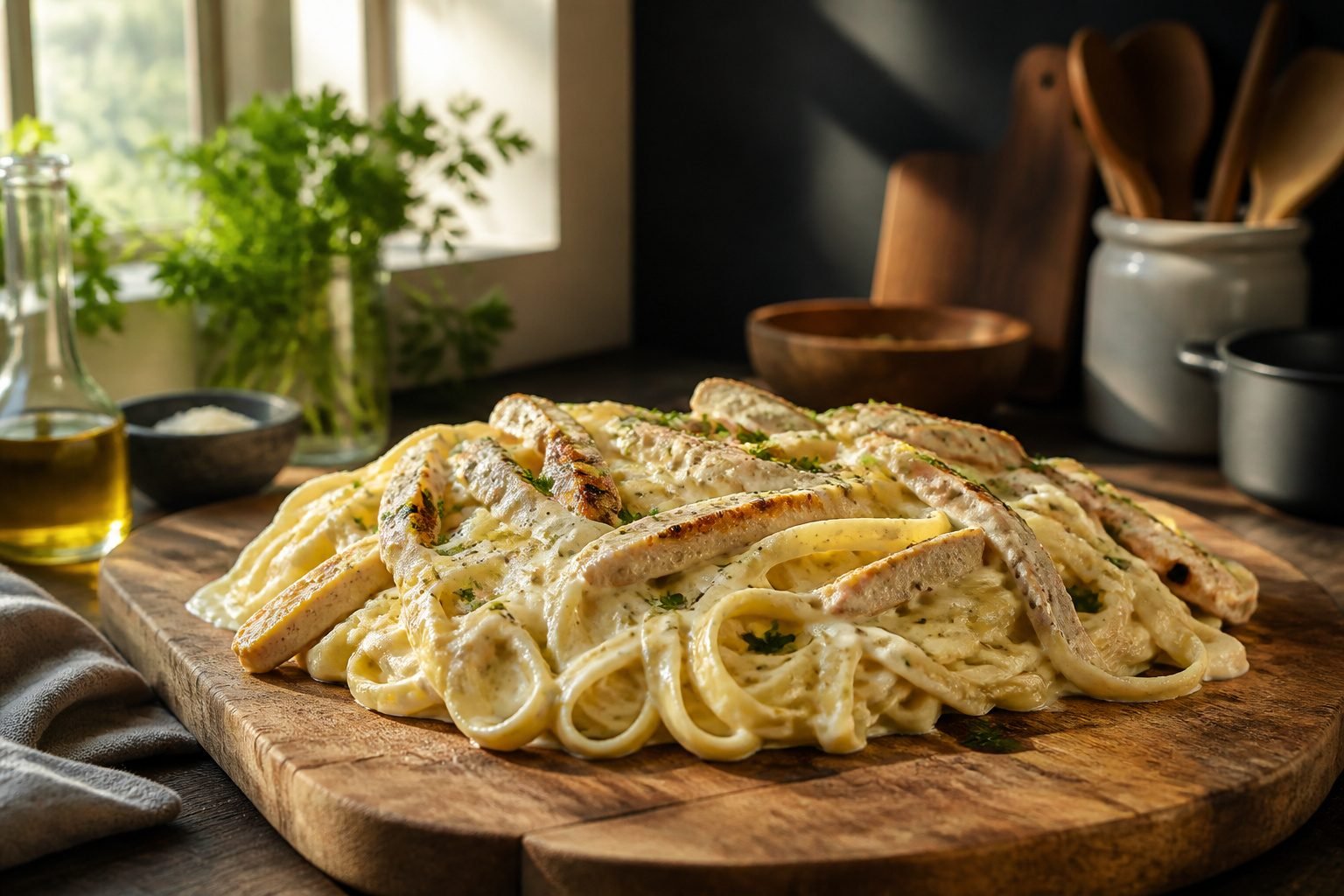
The sauce here is built from nothing but heavy cream, butter, and Parmesan melted in at low heat, which gives it a silkiness that flour-thickened versions never quite reach.
What breaks it is too much burner, and the fix is patience: stir constantly at medium-low, and the sauce coats a spoon inside of ten minutes.
One stick of butter goes into the pan, the other half waits for the chicken.
Ingredients

The ingredient list for chicken alfredo pasta is short, but the details matter more than the count.
For the chicken and pasta:
- 1 lb boneless, skinless chicken breast, sliced thin or pounded even
- 8 oz dried fettuccine
- 2 tbsp cooking oil
- 1 cup butter (2 sticks), divided in use
- 4 cloves garlic, minced
For the sauce:
- 4 cups heavy cream
- 1 cup finely grated Parmesan cheese, plus more at the table
For seasoning the chicken:
- ¾ tsp garlic powder
- ¾ tsp onion powder
- 1 tsp paprika
- ½ tsp black pepper
- ½ tsp salt
For the sauce seasoning:
- ½ tsp salt, plus more for the pasta water
- ½ tsp ground black pepper, divided
- ½ tsp dried Italian seasoning
- ½ tsp white pepper
Optional add-ins:
- ¼ cup sundried tomatoes, finely chopped
- Broccoli florets
One practical note on the cheese: freshly grated Parmesan melts into the cream far more smoothly than the pre-grated tubs.
The anti-caking agents in packaged grated cheese can leave the sauce slightly grainy, and for a dish this simple, that texture difference is worth the extra minute with a microplane.
Recommended Products

Knorr Alfredo Sauce Mix has a velvety blend of cheeses that complements pasta, chicken, fish, and veal dishes perfectly
One 15 OZ jar of Bertolli Alfredo with Aged Parmesan Cheese Pasta Sauce

GARLIC ALFREDO SAUCE: 15 oz jar of Bertolli Garlic Alfredo Pasta Sauce with parmesan, cream, butter, and savory garlic
Method

- Pat the chicken dry, then season both sides with salt and pepper. Heat 2 tablespoons of oil in a large skillet over medium heat. Lay the chicken in the pan and cook for 3 to 5 minutes per side, until the exterior turns golden and the internal temperature reads 165°F. Transfer to a plate and tent with foil.
- Bring a large pot of generously salted water to a boil. Add the fettuccine and cook for 8 to 10 minutes, until it bends easily but still has bite when you sample a strand. Reserve half a cup of the starchy water, then drain.
- In the same skillet, melt the butter over medium heat. Add the minced garlic and sauté just until fragrant, about 30 seconds to 1 minute. Pour in the heavy cream, then season with salt, pepper, and a pinch of Italian seasoning. Reduce the heat to low and let the cream barely simmer. Gradually stir in the Parmesan, whisking until the sauce turns smooth and coats the back of a spoon. If it tightens too much, splash in a little reserved pasta water.
- Add the drained pasta directly to the pan and toss until every strand is coated.
- Divide among plates, top with sliced chicken, and finish with chopped parsley or fresh basil leaves.
Recommended Products

Creamy Alfredo sauce made simply with cream and parmesan cheese, combined with grilled chicken and fettuccine. 3 ingredients, ready in less than 10 minutes!

Chicken strips and fettuccine with broccoli, parmesan, romano, parsley, and alfredo sauce

Fettuccine in a creamy parmesan sauce
Ingredients Overview

Quality ingredients make the difference between a sauce that coats the pasta and one that pools at the bottom of the bowl.
Fresh Parmesan, grated on the finest side of a box grater just before you start, melts into a smooth emulsion with the hot pasta water and heavy cream.
Pre-grated cheese contains cellulose to prevent clumping, and that same anti-cake agent fights the melty texture you’re after. Heavy cream is non-negotiable here; half-and-half splits under heat, and almond milk lacks the fat content to build any real body.
Rotisserie chicken works as a solid shortcut, though it changes the rhythm of the recipe.
You’ll skip the seasoning and searing step entirely, which shaves about 15 minutes off the front end, but add the shredded meat only at the very end so the pre-cooked pieces don’t toughen in the warm sauce.
Rotisserie chicken saves time, but you lose the fond from pan-searing; those browned bits in the skillet build flavor that store-bought simply can’t match.
Recommended Products

BelGioioso cheeses are made with all-natural ingredients
One 5 ounce container of Grated Parmesan Cheese

Brought to you by Whole Foods Market
Cooking Techniques

Pan-frying chicken for Alfredo gives you that golden crust in about 3 to 5 minutes per side, though baking or air-frying works too if you want less active time at the stove.
Whichever route you take, 165°F internal temperature is the number that actually matters, and a cheap instant-read thermometer removes the guesswork.
The sauce is where technique really shows. Heavy cream and Parmesan are finicky partners; too much heat and the fat separates into something grainy instead of silky.
I keep the burner at medium-low and stir constantly while the cream goes in, which is slower but far more forgiving than rushing.
The sauce is ready when it coats the back of a spoon and holds a line you can draw through it with your finger.
Visual cues beat timers here. The chicken should feel firm and show no pink at the center; the pasta, tasted a minute before the box says it’s done, should still have slight resistance.
For the sauce, thickness is a moving target: save that half-cup of pasta water and add it by the tablespoon if things tighten up more than you wanted.
Recommended Products

Perfect Pinch Rotisserie Chicken Seasoning is a savory seasoning for chicken

Zesty blend of garlic, onion, black and red pepper, and paprika
Pasta and Sauce Variations

Fettuccine is the classic choice for chicken alfredo pasta, and for good reason: its flat, wide surface catches the sauce instead of letting it slide off.
Angel hair works in a pinch, though the delicate strands can clump under a heavy cream sauce and the whole plate goes cold faster than you’d want.
For low-carb versions, shirataki noodles or spiralized zucchini need a different approach entirely; the extra water they release will thin the sauce unless you drain and dry them aggressively first.
Sauce adjustments are where small changes make a real difference. A tablespoon of cream cheese melted in at the end adds body without changing the flavor you’d recognize.
If you’re already working with almond flour for a low-carb roux, use less than you would with all-purpose; it thickens faster and can turn grainy if you push it too far.
A thin sauce can be saved with more grated Parmesan or an extra few minutes of gentle simmering, though cheese works faster and simmering risks breaking the cream. I lean toward cheese when I’m hungry and patience is already thin.
Recommended Products

Creamy, savory authentic Italian flavor

BRING HOME THE FLAVOR YOU LOVE: Made with Italian herbs, parmesan cheese and garlic, our Parmesan Garlic sauce delivers the familiar, delicious taste you love.

Campbell's Condensed Sauces, new from America's favorite soup maker, make dinner easy when you add your favorite protein
Serving Suggestions

A plate this rich needs something sharp or crisp alongside it.
Garlic bread does the heavy lifting, its crust catching every last bit of sauce. A green salad with a bright vinaigrette works the same way, cutting through the cream instead of piling on more of it.
Roasted vegetables hold up better than steamed ones here.
Broccoli, asparagus, or green beans roasted until the edges char will stand against the pasta without turning to mush. If you want vegetables in the dish itself, stir ¼ cup of sundried tomatoes into the sauce while it simmers.
They add a concentrated sweetness that balances the Parmesan. Chopped fresh parsley over the top is enough garnish; it brings color and a faint bitterness that wakes everything up.
Save the broccoli for the roasting pan, or add it to the pot in the last few minutes of cooking if you want it soft enough to fold in.
Recommended Products

One 16 OZ jar of Ragu Classic Alfredo Sauce, Made with Real Cheese

CLASSICO ALFREDO SAUCE: One 15 oz jar of Classico Creamy Alfredo Pasta Sauce

POWDERED ALFREDO SAUCE MIX: Whisk ⅓ cup into 1 cup hot water for rich, creamy fettuccine alfredo in about 3 minutes. No cream to buy, no jar to finish, no refrigeration.
Storage and Leftovers

Leftover chicken alfredo pasta goes into an airtight container and keeps in the refrigerator for up to 3 days.
The sauce sets up firm in the cold, almost like a paste, because the butter and cheese solidify together. That thickness is normal, not a sign of anything wrong.
The microwave is risky here. Short bursts tend to heat unevenly, and the oil in the butter can separate out, leaving you with greasy noodles and a broken sauce.
A saucepan over low heat works better, with a splash of milk or cream stirred in as it warms.
The liquid loosens the chilled sauce back to something silky, and the gentle, steady heat holds the emulsion together where aggressive zapping breaks it.
If the cheese does separate slightly anyway, which happens sometimes with any creamy dairy-based sauce, that splash of dairy still helps smooth things back together. Low and slow is the only move worth making.
Recommended Products

Knorr Pasta Sides Alfredo Broccoli Fettuccine is a pasta side dish that enhances meals with amazing flavor.


CRAFTED WITH QUALITY YOU CAN TASTE Stouffer's frozen dinners are thoughtfully crafted with flavorful, quality ingredients. Our chicken dinner is made with grilled white meat chicken, broccoli & fettuccine in a creamy alfredo sauce SNAP and EBT item in eligible states
Frequently Asked Questions
Recommended Products

One 6 ounce bag of Shredded Parmesan Cheese

BelGioioso cheeses are made with all-natural ingredients

One 8 oz. shaker bottle of Kraft Grated Parmesan Cheese
What is the best pasta for chicken alfredo pasta?
Fettuccine is the classic choice because its flat, wide surface catches the sauce instead of letting it slide off.
Angel hair works in a pinch, though the delicate strands can clump under a heavy cream sauce and cool faster than you’d want.
Can I use rotisserie chicken for chicken alfredo pasta?
Yes, rotisserie chicken works as a solid shortcut. You’ll skip the seasoning and searing step entirely, which saves about 15 minutes, but add the shredded meat only at the very end so the pre-cooked pieces don’t toughen in the warm sauce.
How do I make chicken alfredo pasta sauce thicker?
Add more grated Parmesan or give it an extra few minutes of gentle simmering, though cheese works faster and simmering risks breaking the cream.
A tablespoon of cream cheese melted in at the end also adds body without changing the familiar flavor.
What’s the secret to good alfredo?
Freshly grated Parmesan melts into the cream far more smoothly than pre-grated tubs, because anti-caking agents in packaged cheese can leave the sauce grainy.
Keep the burner at medium-low and stir constantly while the cream heats; too much heat and the fat separates instead of turning silky.
What is an easy 3-ingredient alfredo sauce?
The sauce here uses heavy cream, butter, Parmesan, garlic, and several seasonings to build its flavor.
What to add to chicken alfredo pasta to make it better?
Stir ¼ cup of sundried tomatoes into the sauce while it simmers; they add a concentrated sweetness that balances the Parmesan.
For vegetables, roast broccoli, asparagus, or green beans until the edges char, or fold in broccoli florets during the last few minutes of cooking.
About The Author
