
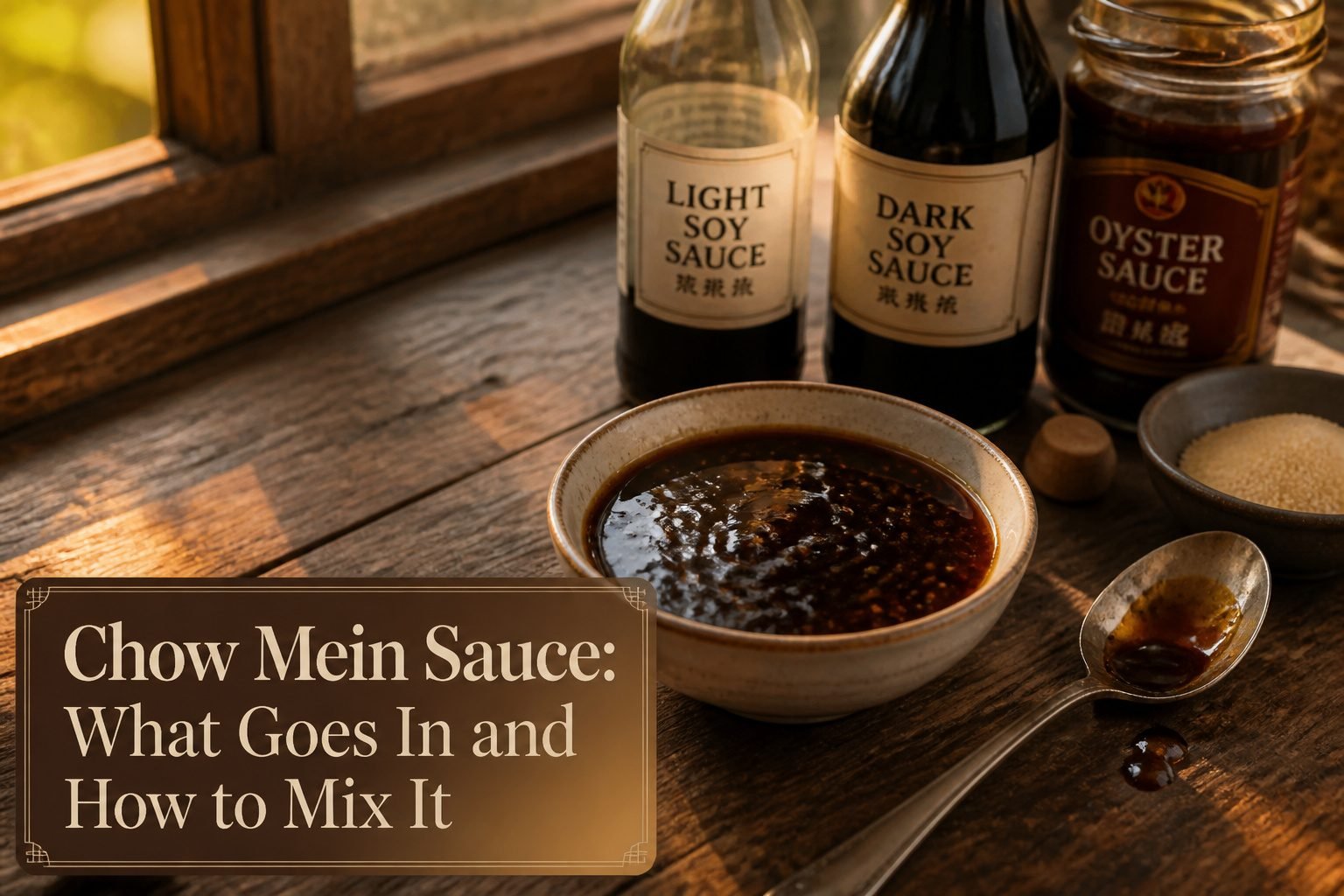
Chow mein sauce is a quick-blended mix of light soy sauce, dark soy sauce, oyster sauce, and sugar, finished with sesame oil.
The two soy sauces are not interchangeable: light soy brings salt, while dark soy adds color and a molasses-like depth that single soy sauce cannot replicate.
The whole base stirs together in about two minutes, faster than the water boils for the noodles.
What Chow Mein Sauce Is Made Of

The core of chow mein sauce is a four-ingredient base that takes about two minutes to stir together.
Light soy sauce and dark soy sauce together form the backbone, and they are not interchangeable. Light soy brings the salt; dark soy, thicker and slightly sweet, deepens the color and adds a more complex, almost molasses-like layer.
Oyster sauce piles on the umami, sugar cuts through the salt with a quick hit of sweetness, and sesame oil finishes it with that warm, nutty aroma that makes the whole dish smell like takeout done right.
Some cooks add chicken bouillon and water to stretch the sauce, but the classic Cantonese build stops at those four.
I keep both soy sauces in the pantry now, because once you start using them as a pair, single soy sauce tastes flat in comparison.
The sugar is just a spoonful, the sesame oil even less, and the whole thing comes together faster than the water boils for the noodles.
Recommended Products

Highly recommended brand

"Shoyu" is the Japanese name for soy sauce.

Naturally Brewed – Made from Non-GM soybeans, this premium dark soy sauce offers a rich, mellow taste with subtle sweetness and less saltiness than light soy sauce. Its umami depth, making it ideal for recipes that require a rounder, more developed flavor profile without overwhelming the dish.
The Oyster-Soy Version

The oyster-soy version is the one most takeout boxes are filled with, and for good reason.
Garlic and ginger do the heavy lifting here, not as background notes but as the flavor backbone that separates restaurant chow mein from the soy-sauce-only home attempts that fall flat.
Three cloves of garlic and two teaspoons of freshly grated ginger per batch is the ratio that shows up again and again; mince the garlic fine enough that it melts into the oil, and grate the ginger while it’s still frozen if you want it to disappear into the sauce entirely.
This style works best when the noodles themselves are getting some direct heat first.
Pan-fry Hong Kong-style noodles in a tablespoon of canola oil until they pick up actual color and a little snap, then pull them and build the vegetables in the same skillet.
The aromatics go into the sauce mixture raw, whisked with a quarter cup of oyster sauce, a tablespoon of soy sauce, and however much Sriracha you want, so they cook only in the final two minutes of tossing.
That late hit keeps the garlic from going bitter and leaves the ginger bright enough to cut through the oyster sauce’s sweetness.
The oyster-soy version gives up some of that boldness for a lighter, more delicate flavor.
Shiitake mushrooms and baby bok choy can stand up to this treatment; more fragile vegetables will get lost. If your produce is especially fresh and mild, this is the version to reach for.
Recommended Products
Item Package Length: 5.842cm

AUTHENTIC CARIBBEAN CHINESE FLAVOR Inspired by bold Caribbean Chinese cooking, this savory sauce helps recreate restaurant-style lo mein, chow mein, stir fry and fried rice dishes at home with rich flavor, satisfying depth and a distinctive takeout-style taste the whole family can enjoy.

What You Get: One 13.5 oz. bottle of P.F. Chang’s Home Menu Sesame Sauce
The Broth-Enriched Version

The pantry version trades soy sauce for chicken bouillon dissolved in warm water, and the difference shows up the moment it hits the pan.
The diluted base spreads thinner, so it coats each noodle individually instead of pooling in the bottom of the wok. You get a lighter, more even glaze, and the salt distributes through the whole dish rather than concentrating in spots.
For a vegetarian swap, skip the bouillon and use salt plus vegan oyster sauce.
The mushroom-based imitation brings back some of that deep savoriness the broth would have contributed, though you will want to start with less and taste as you go.
The salt level in these substitutes varies brand to brand, and the vegan oyster sauce can run sweeter than its namesake.
Recommended Products


Contains one 42-oz. can of La Choy Chicken Chow Mein White Meat Chicken & Sauce With Asian-style Vegetables
Mixing and Balancing

- Grab a small bowl and pour in the soy sauce, then the oyster sauce or hoisin, whichever version you’re building. Add the sugar, the sesame oil, and any white pepper. Whisk until the sugar dissolves completely; granules left at the bottom will scorch in the hot wok.
- Taste the sauce now, before it ever touches heat. A pan changes everything: sugar reads less sweet, salt reads sharper. What tastes balanced at room temperature will flatten out once it hits noodles over a burner.
- If it pulls too salty, a splash of water loosens it without adding more sodium. Too thin or too sweet, a few extra drops of soy sauce deepen the backbone. Too dark or heavy, pinch more sugar. Adjust in tiny increments; soy sauce runs away from you fast.
- The same bowl works for marinating. If you’re cooking chicken or pork, set a few spoonfuls aside before the rest goes to the noodles. Proteins take on more character with even a ten-minute soak in the same sauce they’ll finish with.
Recommended Products

10 oz organic reduced sodium shoyu soy sauce

Buy Local Market

ELEVATE EVERY DISH. From dumplings to stir-fries, salads, noodles, and marinades, this versatile sauce adds instant restaurant-quality flavor to everyday cooking.
Using It Right Away

The sugars in chow mein sauce will scorch if they hit the pan alone, so the sauce goes in only after the proteins have seared and the vegetables have started to soften.
High heat keeps everything moving; the liquid hits the hot metal, steams instantly, and coats the ingredients rather than pooling.
Noodles drink up the sauce fastest, turning glossy in under a minute. Vegetables need a little longer, especially dense ones like carrots or broccoli stems, since their surfaces repel liquid until the cell walls break down.
Proteins are the slowest to absorb flavor; sliced chicken or pork benefits from that brief simmer in the sauce, though shrimp turn rubbery if they sit in liquid more than a moment.
The motion matters as much as the timing. A spatula scraping the pan bottom prevents the cornstarch from settling into sticky spots, and the constant toss lets each piece touch the heat evenly.
Miss that rhythm and you will find clumps of sauce on some bites, bare noodles on others.
Recommended Products

Authentic Hong Kong–Style Noodles Thin, smooth, and crafted for classic Cantonese dishes with perfect bite and texture.

CRISPY. GOLDEN. AUTHENTIC.:Crispy fried noodles with golden authentic crunch. Light, crispy, and full of flavor, made to bring classic chow mein texture to your favorite dishes.

Product Description: CHIN-SU Chili and Garlic sauce in a convenient 250ml bottle
Storing What Is Left

Leftover chow mein sauce keeps in the refrigerator for about a week. The oil separates from the soy and oyster sauce base while it sits, so you will need to stir it back together before using it again.
A quick whisk with a fork does the job; if it has thickened too much, a teaspoon of warm water loosens it without throwing off the balance.
Freezing is not worth the trouble. The oyster sauce breaks down in the cold, turning grainy and thin once it thaws.
The texture never quite recovers, and the sauce you pull from the freezer ends up splitting in the pan no matter how hard you shake the jar.
Better to make only what you need, or plan on using the extra within the week.
Recommended Products

Healthier Seasoning: Enjoy the delectable flavors without worrying about excessive calories, as it boasts a mere 10 calories amount per serving. your health concerns are diminished.

La Choy Lite Soy Sauce is full of flavor, with half the sodium of regular La Choy soy sauce

Essential All-Purpose Seasoning – Elevate the flavor of meats, vegetables, and fusion dishes effortlessly with this versatile soy sauce. Whether you’re preparing stir-fries, steaming dumplings, or crafting fusion recipes, it’s the ultimate choice for authentic Chinese cooking and global Asian cuisine.
Ingredients for Chow Mein Sauce

The core chow mein sauce builds from soy sauce and oyster sauce as its base, with sugar to balance the salt. From there, recipes split into two camps.
Some stop there and add sesame oil for nuttiness. Others stretch the same base with chicken bouillon and water to make a thinner, more pourable sauce that coats noodles without pooling.
- Light and dark soy sauce are not interchangeable. Dark soy sauce adds color and a slightly thicker, more molasses-like depth; light soy sauce handles the bulk of the salt. A recipe calling for both wants the color dark soy brings.
- Oyster sauce supplies the umami backbone. At ¼ cup in a typical batch, it does heavy lifting.
- Sugar is non-negotiable. Even a small amount keeps the sauce from tasting one-dimensional and flat against wheat noodles.
- Sesame oil sits in the extended column. It adds aroma and a rounded finish, but a strict Cantonese soy sauce chow mein may skip it entirely.
- Garlic and ginger show up in some versions, minced fine and whisked in raw. They add heat and brightness, though they shift the profile toward something closer to a stir-fry all-purpose sauce.
- Chicken bouillon plus water is the pantry extender. It thins the viscosity and adds a background savoriness that reads as richer than water alone. Skip it if you want a thicker, more concentrated glaze on your noodles.
The essential list: soy sauce, oyster sauce, sugar. Everything else answers to preference and what style of chow mein you are after.
Recommended Products

Rich Umami Flavor – Crafted with the finest oyster extract, this sauce delivers a robust and balanced umami flavor, that is both savory and sweet, enhancing the natural flavors of meats, vegetables, and other ingredients. Its rich, savory taste adds depth and complexity to dishes, elevating everyday meals to restaurant-quality creations.

Rich Umami Flavor – Crafted with the finest oyster extract, this sauce delivers a robust and balanced umami flavor, that is both savory and sweet, enhancing the natural flavors of meats, vegetables, and other ingredients. Its rich, savory taste adds depth and complexity to dishes, elevating everyday meals to restaurant-quality creations.

WOK MEI GLUTEN FREE OYSTER SAUCE - Our gf sauce is carefully made with key ingredients and a great addition to any meal. Great for anyone who is gluten intolerant
Preparation Tips

The difference between chow mein that tastes like takeout and the kind that sits in the fridge untouched usually comes down to mixing the sauce until every grain of sugar and cornstarch has fully dissolved.
I whisk for a solid 30 seconds past when it looks done, because any grit left in the bowl ends up as a gummy streak on the noodles.
Tasting for balance before the pan ever hits heat saves the whole dish. Soy sauce brands vary enormously in saltiness, so the same tablespoon that worked last week might read as harsh today.
I dip a clean spoon, let it sit on my tongue, and adjust from there, sometimes adding a few extra drops of sesame oil or a pinch more sugar.
Marinating proteins directly in the sauce for even 15 minutes does two jobs at once: it seasons the meat and gives it a lacquered surface that sears faster in the wok.
The sauce reduces slightly as it clings, concentrating that savory-sweet glaze rather than pooling at the bottom of the plate.
Recommended Products

Hoo-Mee Gravy Mix 1 Pound


Serving Suggestions

Chicken soaks up the oyster-soy version differently than beef does; the darker, saltier base needs something with heft, so thighs hold up better than breast.
Shrimp wants the lighter broth-enriched sauce, the kind that pools slightly at the bottom of the plate without turning gluey.
Vegetables are the same story. Cabbage and carrots release water as they hit the wok, which thins the sauce whether you want it to or not; mushrooms, on the other hand, drink it in and ask for more.
The three variants split cleanly by protein and by mood. The straight soy-sesame mix works for a quick Tuesday with whatever is in the drawer.
The oyster-soy build is what I reach for when the chicken is already marinating. The broth version belongs to wider noodles and a slightly wetter finish, the kind you eat with a spoon chasing the last of it.
Chow mein sauce is not a side-sit condiment. It tightens as it cools, and the cornstarch turns from silky to pasty within minutes of leaving the heat.
The noodles have to go in while the sauce is still loose enough to coat, which means mixing right there at the stove and serving immediately.
A bowl on the table beside the plates misses the window entirely; by then you are eating dressed noodles, not chow mein.
Recommended Products

VERSATILE COOKING ESSENTIAL: Elevate your dishes with Lee Kum Kee Oyster Sauce, perfect for adding rich umami flavor to stir-fries, marinades, and dipping sauces

🦪 𝑸𝒖𝒂𝒍𝒊𝒕𝒚 𝑭𝒍𝒂𝒗𝒐𝒓 - Boiled from 300 oyster(70% of a bottle of oyster sauce is oysters), Sauce Grandmaster is dedicated to serving your family delicious sauces free of artificial preservatives, sweeteners, flavors and colors from artificial sources.

LeeKumKee Kum Chun Soy Sauce
Frequently Asked Questions
Recommended Products

Teriyaki reimagined with Momofuku's soy-forward approach: savory depth first, sweetness second

Cho Mein Noodles with soy sauce fideos para chao mein con soya 15% more

REAL FERMENTED GOCHUJANG — NOT JUST ANOTHER HOT SAUCE (Heat: 1/4 Mild) – Made with traditionally fermented Korean red chili paste that delivers a layered sweet-savory-spicy umami depth. This is the complex, slow-built flavor that mass-produced chili sauces cannot replicate — the same gochujang Koreans have trusted for generations.
What are the main ingredients in chow mein sauce?
The core is light soy sauce, dark soy sauce, oyster sauce, and sugar.
Sesame oil rounds it out with a nutty aroma, though a strict Cantonese version may skip it. Light soy handles the salt while dark soy deepens color and adds molasses-like complexity.
How do I make chow mein sauce?
Pour soy sauce and oyster sauce into a small bowl, add sugar, sesame oil, and any white pepper, then whisk until the sugar dissolves completely.
Taste it at room temperature before cooking; a pan makes sugar read less sweet and salt read sharper, so adjust accordingly.
Can I customize chow mein sauce?
Yes. Add minced garlic and grated ginger for brightness and heat, or swap chicken bouillon and water for a thinner, more evenly coating sauce.
For vegetarian, use vegan oyster sauce and salt instead of bouillon, tasting as you go since sweetness and salt levels vary by brand.
What’s a good substitute for oyster sauce?
For a vegetarian swap, use vegan oyster sauce made from mushrooms. It brings back some deep savoriness, though it can run sweeter than standard oyster sauce, so start with less and taste as you go.
What are common mistakes in chow mein?
The most frequent error is not whisking until every grain of sugar dissolves; any grit becomes a gummy streak on the noodles.
Another is adding sauce to an empty hot pan, where the sugars scorch; it should hit only after proteins have seared and vegetables have softened.
Serving it as a side condiment also fails, since the sauce tightens and turns pasty within minutes of leaving the heat.
About The Author
