
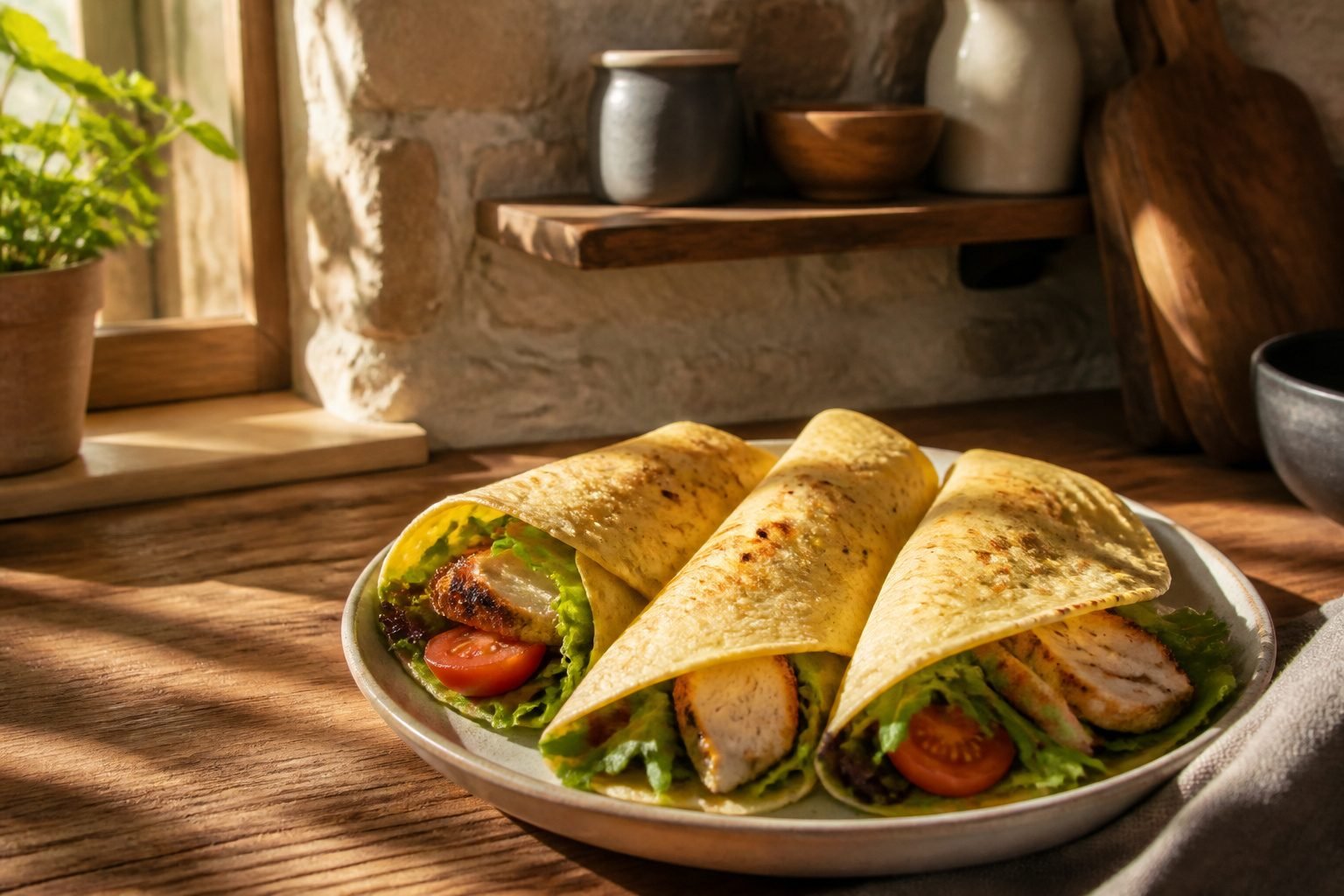
The almond flour wrap with xanthan gum is the one I make most often, because the ingredient list is short enough that I almost always have everything without a special trip.
Skip it if you need egg-free; the psyllium version handles that, though some brands tint the dough an alarming purple that only bakes out in the pan.
The real variable is time: factory wraps solve the ten-minute dinner, but the texture stays slightly rubbery and the ingredient lines get muddy fast.
1. Almond Flour Wraps With Xanthan Gum

Megan Ellam’s almond flour wraps start with 180 grams of almond flour and 20 grams of coconut flour, which adds flexibility without adding much flavor.
The 10 grams of xanthan gum is what gives these their real elasticity, binding the dough so it stretches like a traditional tortilla rather than crumbling at the fold.
The apple cider vinegar does more than you’d think.
At 15 grams, it strengthens the dough structure and helps create that characteristic stretch, working with the egg to hold everything together. Room-temperature egg matters here, a cold one leaves an eggy taste that the warm dough won’t shake.
I mix the dry ingredients first, then add the 45 grams of water, the egg, and the vinegar.
The dough comes together quickly and rolls out between parchment. A hot skillet does the rest, about a minute per side until you see spots forming.
Thicker wraps need the full minute, thinner ones less. Spotting is your signal, not a timer.
These cook clean and store well, and the ingredient list is short enough that I usually have everything on hand without a special trip.
Recommended Products


365 by Whole Foods Market products give you that dance-down-the-aisles feeling, virtual aisles too! Our huge range of choices with premium ingredients at prices you can get down with makes grocery shopping so much more than tossing the basics in your cart.

One 14-count package of Mission Zero Net Carbs Original Tortillas
2. Psyllium Husk Wraps Without Eggs

Psyllium husk powder does the binding work that eggs usually handle in keto tortillas.
Elavegan’s recipe runs 96 grams almond flour, 18 grams coconut flour, and 10 grams psyllium husk powder with a half-teaspoon of baking powder, salt to taste, a tablespoon of olive oil, and 120 grams of warm water.
The warm water matters: it activates the psyllium so the mixture gels into something you can actually roll.
Without egg, the texture stays softer and more flexible than egg-heavy versions that set up firmer in the pan.
These tortillas bend without cracking, which matters more than you’d think when you’re wrapping something saucy. They hold together fine, but without egg you lose that slight chew from cooked protein.
Some psyllium brands tint the dough purple.
The color looks alarming, but it bakes out normal and doesn’t affect the taste. If you want to skip psyllium entirely, two teaspoons of xanthan gum is the usual substitution, though I haven’t tested that swap myself.
Recommended Products
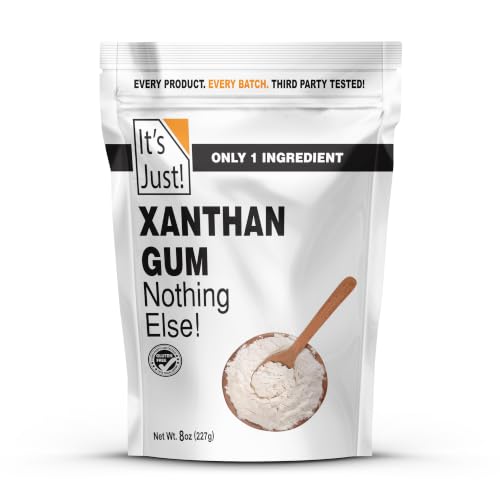
It's Just - Xanthan Gum, 8oz, Batch Tested Gluten Free, Keto Baking, Non-GMO, Thickener for Sauces, Soups, Dressings, Packaged in USA

PURE POWDER: Xanthan gum is actually a widely-used thickening agent, and xanthan is legendary for its ability to increase liquid viscosity with just a tiny amount and is stable throughout a wide range of temperatures and pH

100% PURE & NATURAL XANTHAN GUM FOR BAKING KETO - Kate Naturals' Xanthan Gum Powder is natural and gluten free. Xantham gum is a great food thickener and is a gluten free baking powder.
3. Lower-Carb Wraps With Extra Xanthan Gum

The extra xanthan gum in this recipe is what separates a wrap that cracks from one you can actually fold.
Keto Diet Yum calls for 2 teaspoons of xanthan gum against just 1 cup of almond flour and 3 tablespoons of coconut flour, which is a higher ratio than most keto tortilla recipes bother with.
That additional binding power keeps the dough elastic enough to roll thin without tearing, and the coconut flour helps it stretch rather than snap when you bend it around fillings.
The 1 teaspoon of baking powder is not enough to make these puffy; it gives just enough lift to keep the texture between flatbread and tortilla, which matters when you stack or roll them.
An egg, 3 teaspoons of water, and 2 teaspoons of apple cider vinegar round out a dough that comes together in a food processor and rests for ten minutes before rolling.
Each wrap clocks in at roughly 2 grams net carbs, depending on your almond flour brand. For burrito-style folding, these outperform thinner almond-flour-only versions that tend to split at the seam.
The trade is a slightly chewier bite and the faint background note of coconut flour, which most people won’t identify but might notice if they are sensitive to it.
Recommended Products

Batch Tested and Verified Gluten Free Product of India, Packed in California USDA Organic, Plant Based, Vegan Friendly, Non-GMO with No Additives Promotes regularity, helps...
4. Store-Bought Wraps Worth Buying

Some nights you just need a tortilla that tears open cleanly and rolls without cracking, and the La Banderita Carb Counter Zero Net Carb Soft Taco is the one I keep coming back to for that.
It clocks in at 0 g net carbs, 1.5 g fat, 4 g protein, and 60 calories per 42 g wrap, which leaves plenty of room in a keto day for whatever you stuff inside.
Factory-made wraps carry wheat gluten and soy that give them pliability, yet also a slight rubberiness no stovetop minute will fix.
Clean ingredient lines are hard to find here. Most commercial versions lean on modified starches and tapioca fiber to mimic the chew of a flour tortilla, and the result sits heavier than anything you would press at home.
Price per wrap runs higher than conventional tortillas too, though the convenience is real when dinner has to happen in ten minutes.
Anyone avoiding wheat gluten or soy should skip these entirely. Both show up in almost every commercial option, and even brands marketed as gluten-free often swap in tapioca fiber and modified starch that muddies the macros.
Recommended Products

PROTEIN-PACKED & LOW-CARB: Each egglife original egg white wrap has 11g protein, 1g carbs, and only 50 calories

One 8-count package of Mission Carb Balance Soft Taco Flour Tortillas

One 8-count package of Mission Carb Balance Soft Taco Whole Wheat Tortillas
What the Flours Do and Why Both

Almond flour brings the fat.
That fat is what keeps a keto tortilla from turning into a cracker, and most recipes lean on it heavily, 1½ cups in one version, a full cup in another, ¾ cup plus a tablespoon in a third.
Without it, the wrap would crack when you folded it.
Coconut flour does the opposite job.
It soaks up moisture like a sponge and gives the dough enough body to roll thin and cook evenly. But the ratio matters.
A little coconut flour goes a very long way, two tablespoons against all that almond flour, three tablespoons at most. Try to swap them one-for-one and you will end up with a dry, crumbly sheet that barely holds together.
The two flours need each other.
Almond flour alone makes a tender but fragile wrap that tears when you fill it. Coconut flour alone would drink every drop of liquid in your kitchen and still feel gritty.
Together, almond flour’s fat carries the flavor and the soft texture, while coconut flour’s absorbency lets the dough roll out thin enough to cook through on a hot skillet without falling apart.
That balance is why every recipe in this category reaches for both.
Recommended Products

One 8-count package of Mission Carb Balance Spinach Herb Tortilla Wraps

One 6-count package of Mission Protein Tortilla Wraps
Skillet Temperature and Timing

Rolling the dough between parchment keeps it from sticking without extra flour that could throw off the texture.
I preheat a non-stick skillet over medium heat while the first wrap is pressed out, then peel the top sheet and flip the whole thing tortilla-side-down into the pan. The parchment lifts away clean.
Light browning in spots, not a timer, tells you when to flip. Most wraps need roughly 45 seconds to 2 minutes per side, though thickness and your particular stove shift that window.
The first side usually takes a touch longer than the second. Thicker dough means more time; thinner risks drying out before it ever flexes.
Recommended Products

One 6-count package of Mission Carb Balance Burrito Tortillas

One 8-count package of Mission Carb Balance Fajita Flour Tortillas

One 6-count package of Mission Carb Balance Whole Wheat Flour Burrito Tortillas
Net Carbs and Macros Per Wrap

Net carbs sit at the center of every keto tortilla decision, with calories and protein trailing behind as secondary concerns.
Homemade wraps typically land between 2 and 4 g net carbs each, depending on how thin you roll them and whether almond flour, psyllium husk, or a blend drives the recipe.
Some psyllium versions push as low as 1 g net carb per wrap, though that usually means a smaller diameter or a sturdier, less pliable texture.
Store-bought options can advertise 0 g net carbs through aggressive fiber subtraction, which is technically accurate but not the whole story.
Those wraps often lean on modified wheat starch, cellulose, or other ingredients that don’t fit every clean-eating approach. The fiber count swells the total carbohydrates, so the math works on paper even if your gut disagrees.
If you are tracking macros for ketosis, the store label wins. If you are also watching for gluten, grain, or highly processed additives, the homemade route gives you control the package cannot match.
Recommended Products

Premium Quality & Food Grade: Our 2lb Xanthan Gum Powder is made with the highest quality standards, ensuring a food-safe, gluten-free, and vegan-friendly product for all your cooking and baking needs.

Contains 1 pound of xanthan gum.

IMPROVED TEXTURE & STABILITY: Food-Grade xanthan gum powder enhances the texture of various food products, such as sauces, dressings, and dairy alternatives. It makes these foods look smoother and more attractive.
Frequently Asked Questions
Are corn tortillas keto?
No, corn tortillas are not keto friendly.
While they have fewer carbs than regular flour tortillas, you would only be able to eat one before fulfilling your carb quota in most cases. It is best to avoid them and use a dedicated keto tortilla recipe instead.
Can almond flour tortillas be frozen?
Yes, almond flour tortillas can be frozen for between 2 and 3 months. They cook clean and store well, making them convenient for batch preparation.
What can I use instead of almond flour?
For a nut-free version, sunflower seed flour works. You can also use ¼ cup of coconut flour instead of 1 cup of almond flour, or try ¼ cup of flaxseed flour, chia flour, or sesame flour.
Keep in mind that coconut flour absorbs much more liquid, so you cannot swap them one-for-one without adjusting the recipe.
What tortilla is keto friendly?
Keto-friendly tortillas include homemade versions made with almond flour, coconut flour, psyllium husk, or xanthan gum, plus store-bought options like La Banderita Carb Counter Zero Net Carb Soft Taco.
Homemade wraps typically land between 2 and 4 g net carbs each, while some store-bought versions advertise 0 g net carbs through fiber subtraction.
Are keto wraps actually keto friendly?
Most keto wraps are keto friendly when they keep net carbs low enough to fit your daily limit. Homemade versions using almond flour, psyllium husk, or xanthan gum usually run 2 to 4 g net carbs per wrap.
Store-bought options can advertise 0 g net carbs, though they often rely on modified wheat starch, cellulose, or other ingredients that may not align with clean-eating goals.
Are Costco keto wraps actually keto?
In general, store-bought keto wraps can fit a keto diet if the net carbs are low enough, though most commercial versions contain wheat gluten, soy, modified starches, or tapioca fiber that some people prefer to avoid.
Check the label for net carbs and ingredients that match your approach.
About The Author
