
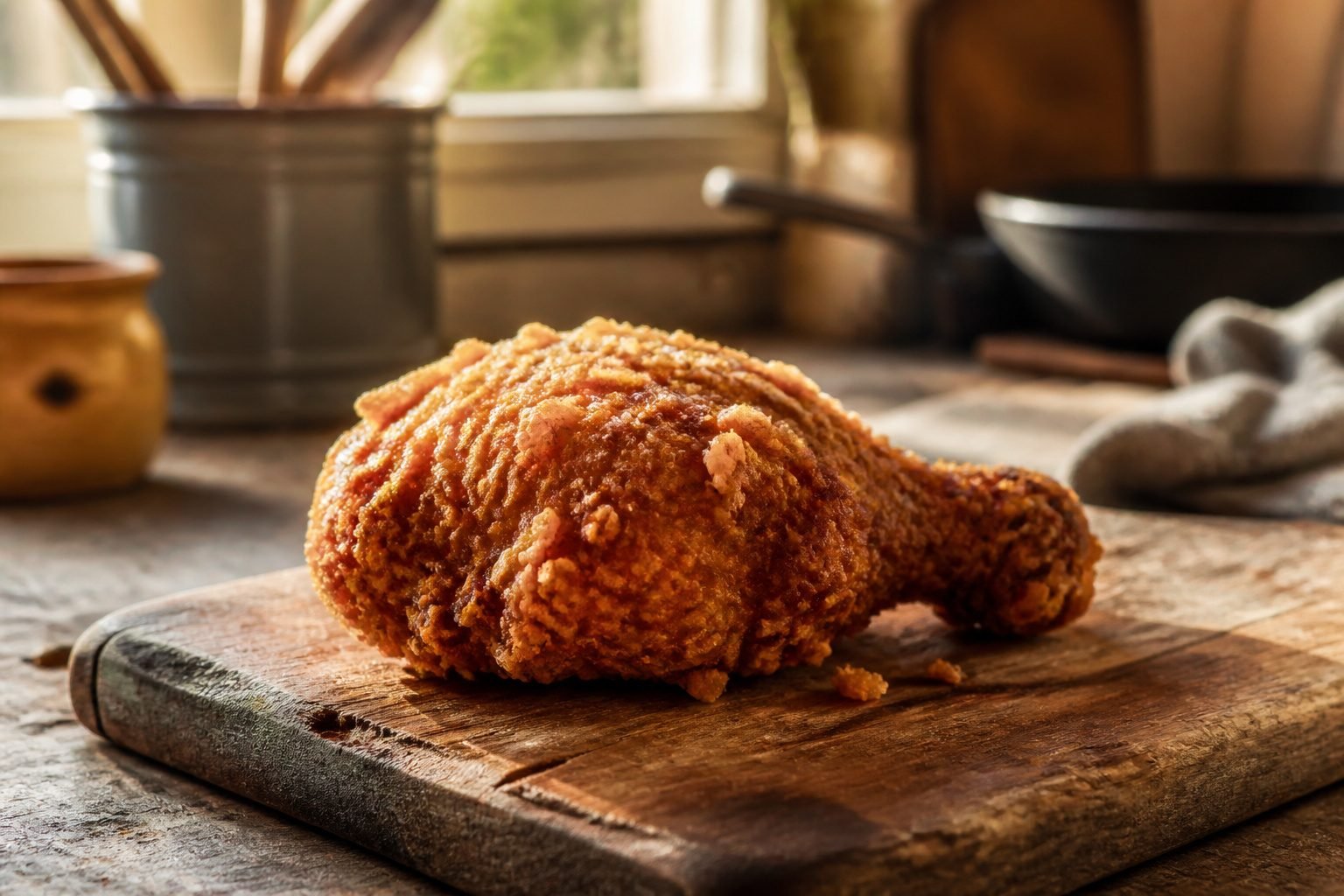
Keto fried chicken is breaded and fried chicken that replaces wheat flour with a mix of almond flour and crushed pork rinds to keep net carbs near 2–5 grams per serving.
The coating will slide right off in the oil if the chicken goes in wet; patting it completely dry before the breading station is the step most recipes rush past.
A 30-minute chill in the refrigerator firms the egg wash and pork rind crust into a single layer that survives frying intact.
Prepare the Chicken

Paper towels do more here than prevent splatter. Patting the chicken completely dry is what keeps the breading from sliding off in the oil, since moisture turns the coating slick before it ever has a chance to set.
I season with salt and pepper right after drying, while the surface is still tacky enough for the grains to cling.
Thighs, breasts, or drumsticks all work, though the cook time shifts with the cut. Very large breasts may need a few extra minutes to reach 165°F internally, while bone-in pieces carry more forgiving timing.
I keep the skin on when I can; it renders into a barrier that helps the breading stay put and adds fat that carries flavor through the meat.
Recommended Products

One 16-ounce resealable bag of Almond Flour

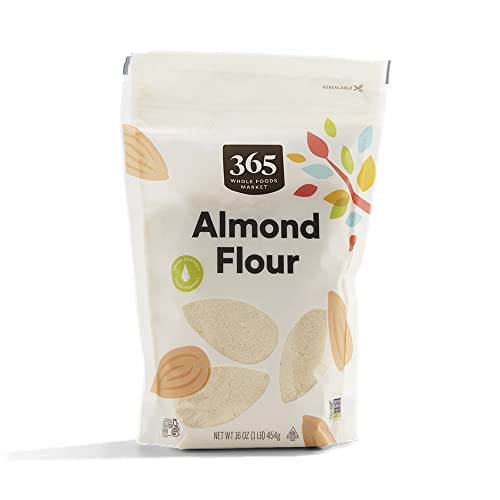
16 ounce bag of finely ground almond flour
Make the Egg Wash

Two large eggs and somewhere between 1/2 and 1 cup of heavy cream go into a shallow bowl.
The range matters more than it sounds like it would. More cream thins the mixture and makes a thinner coat; less keeps it thicker and clingier.
I land closer to the full cup when the breading is heavy on pork rinds, which soak up liquid fast and can turn gummy if the wash runs too dry.
Heavy cream carries fat that milk cannot match, and that fat does two jobs at once.
It helps the almond flour and pork rind coating adhere without the usual flour-and-buttermilk chemistry, and it deposits richness onto the crust that frying oil alone would struggle to match on keto.
The result fries crisper and tastes less like a compromise.
Whisk until the color evens out to pale yellow and no streaks of yolk remain. A fork works fine; a whisk is faster.
The mixture should look like thin custard, not scrambled eggs in waiting. If it sits more than a few minutes, the cream and egg can separate, so I make this right before the breading station is fully laid out.
Recommended Products
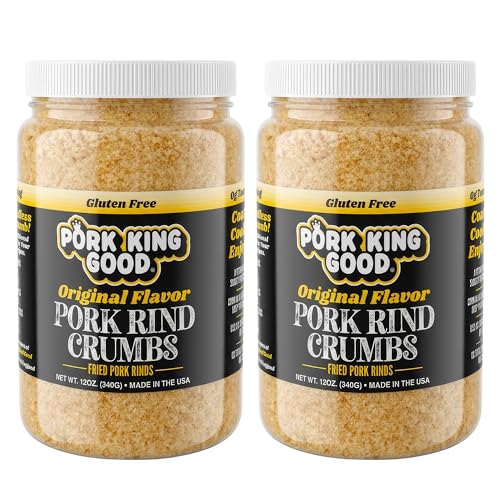
Zero Carb Keto-Friendly Alternative: For those following a ketogenic diet, paleo diet, bariatric diet, gluten-free, diabetic diet, or just watching your carbs, you'll now be able to enjoy your favorite foods again without the guilt! Each serving of our Pork King Good Pork Rind Crumbs has absolutely no carbs

NO CARBS: For those of you following a ketogenic diet, paleo diet, bariatric diet, gluten-free, diabetic diet, or just watching your carbs, you'll now be able to enjoy your favorite foods again without the guilt! Each serving of our Pork King Good Pork Rind Crumbs is carb free with 0 carbs per serving
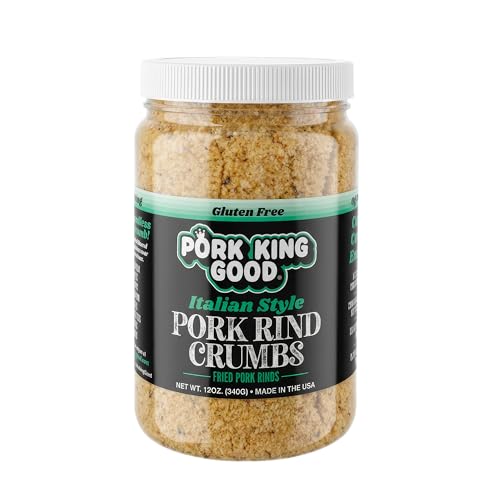
NO CARBS: For those of you following a ketogenic diet, paleo diet, bariatric diet, gluten-free, diabetic diet, or just watching your carbs, you'll now be able to enjoy your favorite foods again without the guilt! Each serving of our Pork King Good Pork Rind Crumbs has absolutely no carbs
Prepare the Breading

The breading mix is where keto fried chicken lives or dies. Almond flour on its own turns soft and mealy in the heat, so the real move is cutting it with something that actually crisps.
Pork rind crumbs are what give you that crackle; without them, you are just baking almond paste onto chicken.
I use 3/4 to 1 1/2 cups almond flour and 1 to 1 1/2 cups finely crushed pork rinds, depending on how many pieces I am feeding, then work in 1/2 to 1 1/2 cups grated Parmesan.
The cheese does double duty: it helps the coating cling and drives the browning you would otherwise miss without wheat flour.
For seasoning, 1 teaspoon garlic powder and 1/2 teaspoon paprika is the baseline that actually tastes like something. Some cooks add cayenne or red pepper flakes if they want heat, but the core formula does not need it.
3/4 cup almond flour, 1 1/2 cups finely crushed pork rinds, 1/2 cup freshly grated Parmesan, 1 tsp. garlic powder, 1/2 tsp. paprika
— Delish
That ratio keeps the pork rinds dominant, which is what you want for texture. I stir everything in a wide bowl so each piece of chicken gets evenly coated without packing the mixture down.
Recommended Products

Bright red measurement markings for easy visibility

Stainless Steel Wire Whip Attachment for KitchenAid 5.5-6 Quart Bowl-Lift Stand Mixer: This stainless steel wire whisk replacement is compatible with KA 5.5-6QT Bowl-Lift Stand Mixer, including Professional 6 & 600 and Professional 5-Plus series

0.5 Quart: convenient small size for whisking eggs and salad dressings
Bread the Chicken

The egg wash is where most keto fried chicken goes wrong. Too thin and the coating slides right off in the oil; too thick and you end up with a gummy layer between meat and crust.
I whisk eggs with heavy cream until the mix turns pale yellow and just barely frothy. That extra fat helps the almond flour and pork rind blend cling without adding a single gram of carbohydrate.
Set up your breading station before you touch the chicken. One shallow bowl for the wet, one for the dry, and a parchment-lined baking sheet waiting off to the side.
Working one piece at a time, dip the chicken into the egg wash, let the excess drip back into the bowl, then press the meat firmly into the breading mixture.
Press harder than you think you need to. The coating has to survive hot oil and the turbulence of frying; a light dusting will separate and leave bare patches.
Some recipes call for a double-dredge through egg and breading, and that extra layer does add heft if you want a thicker crust. I find one thorough pass is enough for weeknight dinner, but the choice is yours.
Lay each finished piece on the prepared baking sheet as you go, giving them space so the coating can set slightly before it ever sees heat.
Recommended Products

Convenient seasoning mix for easy weeknight meals

FAST, EASY, & DELISH: Bring gourmet flavor to any meal; Quality ingredients spice up anything you cook
Chill the Chicken

The breading on keto fried chicken is fragile stuff.
Pork rind crumbs and almond flour do not cling to egg the way wheat flour does, and the moment that chicken hits hot oil, the loose coating wants to lift right off.
A 30-minute chill in the refrigerator sets the breading so it stays put through the full cook.
Skip this and you will watch half your coating float away in the first two minutes of frying, leaving bare patches and a greasy pan full of burnt crumbs.
Set the chicken on a parchment-lined baking sheet before it goes into the fridge. The paper keeps the breading from sticking to the metal and tearing when you move the pieces to the oil.
The cold firms the egg wash, the cheese in the coating, and the chicken skin itself into something like a single layer.
That solidified shell crisps better, too. The juices stay trapped inside rather than weeping out and steaming the crust soft.
Thirty minutes is the minimum. If dinner is running behind and the chicken sits for an hour, nothing suffers.
What suffers is pulling it straight from the breading station to the skillet because you are hungry and the oil is ready. The coating needs that rest more than you need the five minutes you think you are saving.
Recommended Products

SEASONED CHICKEN FRY MIX: Classic Fried Chicken Keto Coating, 5 oz delivers a clearly defined Louisiana-style pantry solution. A seasoned chicken coating helps create the crisp texture and savory Southern-style flavor associated with Louisiana fried chicken. Review the package before use for the exact ingredient and allergen information.

ONE PANTRY STAPLE FOR EVERY LIFE STYLE: A must-have ingredient for the modern kitchen. Clean keto, paleo, plant-based, gluten-free, and grain-free breadcrumb substitute with only one net carb per serving; perfect for health-conscious cooking without compromising on taste or texture.

Zero Carb Keto-Friendly Alternative: For those following a ketogenic diet, paleo diet, bariatric diet, gluten-free, diabetic diet, or just watching your carbs, you'll now be able to enjoy your favorite foods again without the guilt! Each serving of our Pork King Good Pork Rind Crumbs has absolutely no carbs
Fry or Bake the Chicken

A heavy skillet with at least two inches of oil set over medium heat will climb to 350°F in about ten minutes.
The breaded chicken goes in skin side down, four pieces at a time, and the temperature drops closer to 325°F once they hit the fat. Six minutes without touching, then flip for another four.
The crust turns the color of dark amber, and a thermometer pulled through the thickest part reads 160°F. Rest the pieces ten minutes before anyone grabs one; the carryover finishes the job.
Baking trades some of that crunch for distance from the stove.
A 375°F oven with melted butter already waiting in the pan does the work in about an hour total: thirty minutes skin down, then flipped until the internal temperature hits 165°F and the coating crackles.
The hands-off time is real, and on a Tuesday when the kids have homework spread across the kitchen table, that matters. The pork rind crust still shatters, just not with the same violence as the fryer version.
Recommended Products

SUPERFINE TEXTURE FOR SMOOTH BAKING: Made from blanched almonds, this superfine almond flour blends easily into pancake mix, bread, muffins and cake recipes without clumps

Contains 1 - 3lb bag of Blue Diamond Almond Flour

ELEVATED BLANCHED ALMOND FLOUR, NATURALLY SKIN-FREE AND PREMIUM CALIFORNIA ALMONDS: Contains a 13 ounce bag of Barney Butter Blanched Almond Flour with one simple ingredient - ground, natural, skin-free almonds. It is a perfect baking option for your low-carb, paleo, glueten-free recipes, or just a healthier protein kick.
Rest Before Serving

The hardest part of making keto fried chicken is actually doing nothing at all. Once that crust turns the right shade of gold and the internal temperature hits 160° F, the instinct is to tear right in.
But letting it rest for 10 minutes gives the juices time to settle back into the meat instead of running out onto your cutting board.
The crust also firms up a touch, so you get that audible crackle instead of a soft bite.
For sides, cauliflower mash makes the most sense to me, though low-carb biscuits or a simple green salad work just as well.
The mash soaks up any stray drippings, and the whole plate still feels like a proper fried chicken dinner without the carb count climbing.
Recommended Products

✓ Carb Free. Friendly to Keto, Paleo, Diabetic, Bariatric Diet

NO CARBS: For those of you following a ketogenic diet, paleo diet, bariatric diet, gluten-free, diabetic diet, or just watching your carbs, you'll now be able to enjoy your favorite foods again without the guilt! Each serving of our Pork King Good Pork Rind Crumbs has absolutely no carbs
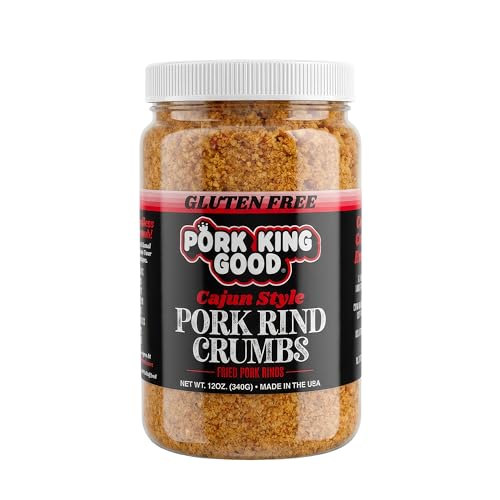
NO CARBS: For those following a ketogenic diet, paleo diet, bariatric diet, gluten-free, diabetic diet, or just watching your carbs, you'll now be able to enjoy your favorite foods again without the guilt! Each serving of our Pork King Good Pork Rind Crumbs has absolutely no carbs
Frying vs Baking

Frying at 350°F for about 10-15 minutes total delivers the crunchiest coating, though it costs more oil and demands your attention at the stove.
Baking at 375°F for 30-45 minutes keeps cleanup lighter and the process hands-off, but the crust stays softer than true fried.
The air fryer splits the difference at 375°F and roughly 20-25 minutes, crisping better than the oven without the oil volume of a skillet.
| Method | Temperature | Time | Crust Texture | Oil Needed | Attention Level |
|---|---|---|---|---|---|
| Pan-fry | 350°F | 10-15 min | Crunchiest | Higher | Active |
| Bake | 375°F | 30-45 min | Softer | Minimal | Low |
| Air fry | 375°F | 20-25 min | Moderately crisp | Low | Moderate |
I fry when the crunch matters most and I have the time to watch the temperature. I bake when weeknight chaos wins and I need the oven to do the work.
Recommended Products

Breader Bowl: Sturdy polypropylene. For easy preparation of fried foods, breads and seasoned meats and vegetables. Recommended for one person—please check size before ordering
[Not just make it, we upgrade it.] We are a professional kitchenware producer who have been focus on customer experience. In order to offer better kitchenware, U-Taste collects customer suggestions of all similar products on Amazon. And then upgrade the products based on the data of the bad evaluation with the aim to provide customers with better kitchenware products.

DURABLE STONEWARE CONSTRUCTION | Crafted from Mason Cash's premium chip-resistant stoneware, the In the Meadow Batter Bowl is designed for everyday baking and meal preparation. Its durable construction provides long-lasting performance while bringing timeless English style to your kitchen.
Almond Flour or Pork Rinds

Almond flour alone will brown in hot oil, but the texture turns out sandy and the coating can slide right off the breast.
Pork rinds fix that crunch problem, yet they bring so much salt that the chicken reads as cured rather than seasoned.
A roughly equal mix of both is what most recipes land on, and it is the balance I would start from.
The almond flour gives the crumb structure and helps the egg wash grip, while the pork rinds shatter between your teeth the way traditional breading does.
Adjust from there: if your pork rinds are heavily salted, pull back on them and let the almond flour do more of the work.
Parmesan folds in easily too, about half a cup for 4 pounds of chicken, adding a savory depth that neither base has on its own.
Crush the pork rinds fine, almost to dust, or the larger shards will burn before the chicken is cooked through.
Nutrition per Serving

A typical serving of keto fried chicken lands at 2–5 grams net carbs, though the exact count shifts depending on how heavy you go with the pork rind coating and whether those rinds carry any hidden sweeteners.
Some brands sneak in sugar that never shows up in the name.
- Calories generally run 380–535 per serving, with fat making up the bulk of that total at roughly 26–43 grams.
- Protein sits in the moderate range, around 32–34 grams, which keeps this squarely inside keto macros without pushing into high-protein territory that can bump some eaters out of ketosis.
- Fiber runs 2–2.5 grams per serving, so the net carb figure already accounts for that subtraction.
These numbers are ranges pulled from different recipes and portion sizes, not precise laboratory counts. Your own batch will move up or down based on the exact breading ratio you settle on and how generously you coat each piece.
Recommended Products

BREAD CRUMBS: Add a toasty, crispy, satisfying crunch to your culinary creations; Great for cooking, baking, frying, and using as a chicken breading or pork coating

Carb Free for Paleo and Keto Diet, Good High Protein Food

Made from premium rinds, PÖRQ Panko Crumbs are for those who love crispy layers of flavor in their meals.
Substitutions

Swapping flours in keto fried chicken takes some care. Coconut flour soaks up far more liquid than almond, so you’ll need less of it, roughly a cup and a half to replace the full almond flour measure in most recipes.
The coating will also behave differently, denser and less crisp.
- Use less coconut flour than the almond flour called for; it absorbs way more moisture and can turn the breading dry and cakey if you match volumes.
- Dairy-free cream works in the marinade; unsweetened almond milk steps in for heavy cream, though the richness drops. You can also simply drop the Parmesan from the breading and add extra seasoning to compensate.
- Avocado oil or refined coconut oil both handle high heat well for frying; they won’t carry the same depth as butter or animal fats, but they get the job done without smoking.
- Nut-free versions exist, yet the texture shifts noticeably. Without almond flour or Parmesan, the crust turns softer and less shaggy.
Frequently Asked Questions
Can I use pork rinds instead of almond flour?
Yes, but a mix of both works better than either alone.
Pork rinds alone bring too much salt and can make the chicken taste cured rather than seasoned. A roughly equal blend gives you the crackle from the rinds plus the structure and grip that almond flour provides.
What is the best oil for frying chicken?
Avocado oil or refined coconut oil both handle high heat well without smoking.
How long should I cook keto fried chicken?
Pan-fry at 350°F for about 10–15 minutes total, flipping after six minutes. Bake at 375°F for 30–45 minutes.
Air fry at 375°F for 20–25 minutes. In all cases, cook until the internal temperature hits 165°F, and let the meat rest ten minutes before serving.
How can I make crispy keto fried chicken?
Press the breading firmly onto the chicken, then chill the coated pieces for at least 30 minutes before cooking.
The cold sets the egg wash and cheese into a solid layer that stays put in hot oil and crisps better than room-temperature coating.
What is the best keto batter for deep frying?
An egg wash of two large eggs whisked with heavy cream, plus a dry mix of pork rind crumbs, almond flour, and grated Parmesan.
The cream adds fat that helps the coating cling without carbs, and the pork rinds provide the shatter you would otherwise miss without wheat flour.
What is the best low-carb flour for frying?
Almond flour mixed with finely crushed pork rinds. Almond flour alone turns soft and mealy in the heat, while pork rinds alone oversalt the meat.
Together they balance structure and crunch. Parmesan folded in adds browning and savory depth.
Can I use baking powder to make keto fried chicken?
The lift and browning come instead from grated Parmesan, which helps the coating cling and drives color without any wheat flour.
About The Author
