
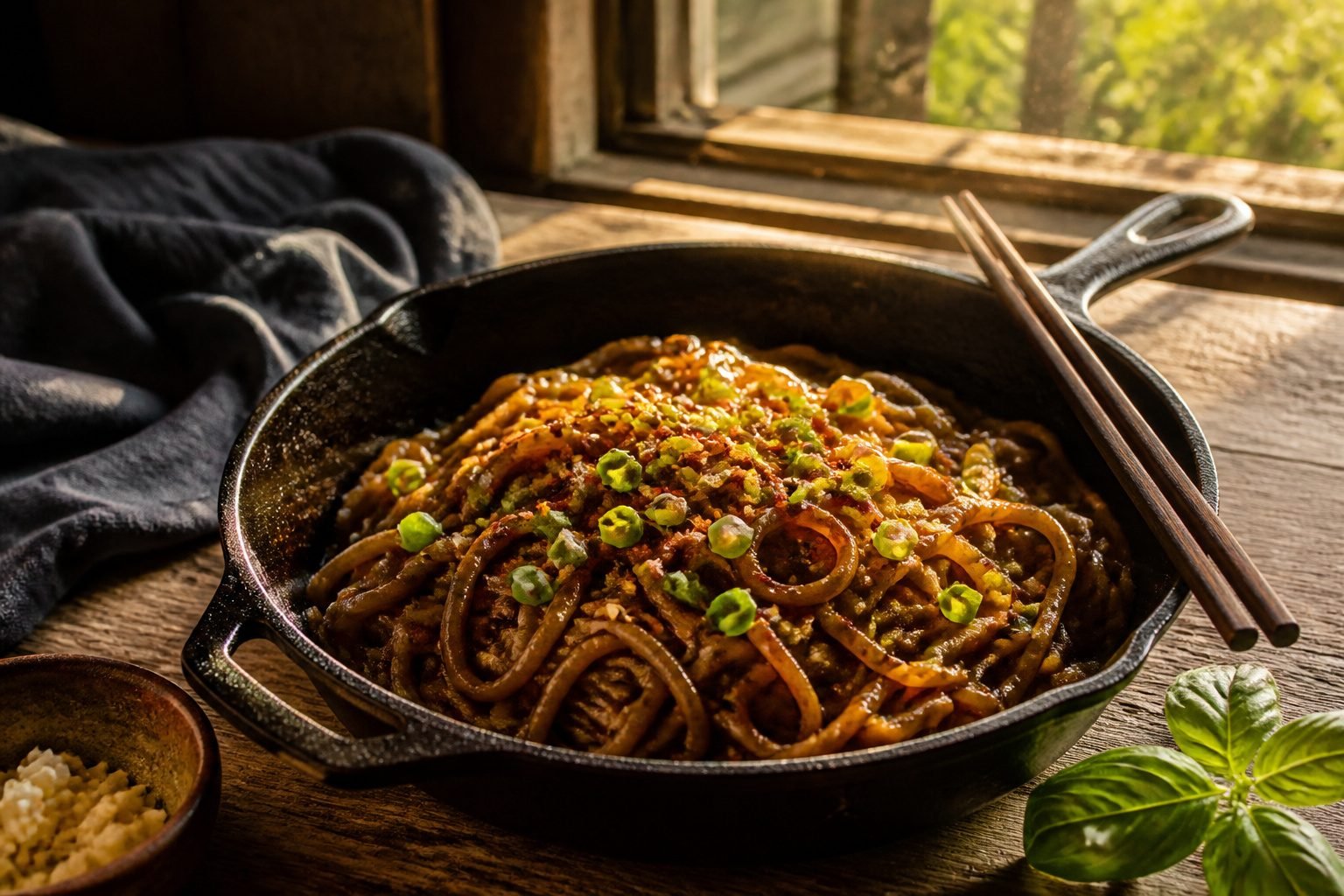
Hoisin garlic noodles taste like dark, sticky sweetness sharpened by raw garlic, with a crisp-bottomed texture that separates them from every saucy noodle bowl that came before.
The whole thing takes 30 minutes and one pan, but only if you rinse the noodles cold after boiling; skip that step and they turn to mush before the hoisin ever hits the skillet.
I keep Lee Kum Kee hoisin in the door of my fridge for exactly this kind of night.
What Hoisin Garlic Noodles Are

Hoisin garlic noodles are wheat noodles tossed in a glossy sauce built on hoisin and fresh garlic, then pan-fried until the bottom turns crisp and lacquered.
The whole thing comes together in about 30 minutes with nothing but grocery-store staples, which is exactly why it lands on my stove when the fridge looks empty and the energy for dinner is running low.
This is the kind of dinner that answers a specific Tuesday night problem: you need something fast, you need the kids to actually eat it, and you need to avoid another drive-through run.
The hoisin brings a dark sweetness that reads as familiar even to picky eaters, while the garlic keeps it from tasting like takeout sugar noodles.
That crunchy layer at the bottom is what separates this from saucy pasta; without it, the dish stops being a stir-fry and becomes a boil-and-drain afterthought.
I reach for this recipe when the vegetable drawer holds nothing but a softening carrot and half an onion, because the sauce carries so much of the weight.
It is not authentic to any particular cuisine, which is fine. It is honest weeknight cooking: borrowed flavors, practical timing, and a technique that asks for one pan and a hot burner.
Ingredients

Most of what you need is probably in your pantry already, or one aisle over at any standard grocery store.
- 14 oz dried wheat or egg noodles — the wide, lo mein-style ones grab the sauce best, but spaghetti works in a pinch
- 1/4 cup hoisin sauce — the backbone of the whole dish; Lee Kum Kee is the bottle I keep reaching for
- 2 tbsp soy sauce — regular, not low-sodium; the salt level matters here
- 1 tbsp sesame oil — toasted, not plain; the flavor difference is the line between flat and fragrant
- 2 tsp maple syrup or honey — maple plays nicer with the hoisin, but honey is what I grab when the bottle’s empty
- 6 garlic cloves, finely chopped — not pressed; you want little irregular bits that crisp unevenly in the oil
- 6 scallions, white and green parts sliced separately — whites go in early to soften, greens at the end for bite
- 4 tbsp toasted sesame seeds — buy them pre-toasted or dry-toast your own; untoasted ones disappear
Optional: a 1-inch knob of fresh ginger, grated fine, or 8 oz of chicken breast or firm tofu, sliced thin and seared off first. The ginger adds heat without pepper; the protein turns this from a side into dinner.
Method

I set a timer for 30 minutes total, prep to plate, and it lands right on the nose.
- Cook 14 oz noodles in salted boiling water until al dente, then drain and rinse under cold water to stop the cooking. This keeps them from going mushy when they hit the hot pan later.
- Mix the sauce: ¼ cup hoisin, 2 tbsp soy sauce, 1 tbsp sesame oil, and 2 tsp maple syrup. Stir until smooth.
- Heat oil in a large skillet over medium-high. Add 6 chopped garlic cloves and the white parts of 6 scallions. Cook until fragrant, about 30 seconds. Do not let the garlic brown; it turns bitter fast.
- Pour in the sauce, then add the noodles. Toss to coat evenly, working quickly so the sauce does not scorch.
- Let the noodles cook undisturbed 2–3 minutes until the bottom turns crispy. That texture against the slick sauce is what makes this dish work.
- Top with 4 tbsp toasted sesame seeds and the green scallion parts. Serve immediately.
Prep time: 10 min | Cook time: 20 min | Total: 30 min | Yield: 4 servings | Calories: 727 per serving
Noodle Types That Work

Dried wheat or egg noodles are the standard starting point for hoisin garlic noodles, and they forgive a lot.
One video walkthrough calls for 14 ounces, cooked to whatever the package says, then rinsed and set aside while the sauce comes together.
The rinse matters more than the brand; it stops the carryover cooking that turns thin noodles to mush before they hit the skillet.
Fresh noodles need less time in the pot and less water clinging to them.
They also lack the starch coat that helps sauce cling, so the toss in the pan has to be more aggressive to get the same glossy finish.
Soba changes the dish entirely. One recipe builds the same hoisin garlic profile around 8 ounces of buckwheat soba, which cooks faster and carries a nuttier baseline that competes with the hoisin rather than laying underneath it.
The texture is firmer, springier, and it goes from al dente to gummy fast, so the window for draining is narrower.
The common thread is stopping short of fully soft.
The noodles finish in the sauce over medium-high heat, absorbing the hoisin and sesame oil while the bottom crisps in those last two to three minutes. Start them too tender and they collapse instead of charring.
Adding Protein

Chicken turns these noodles from a quick side into a proper dinner, and the timing works out cleanly. Dice it small, get the pan hot with oil, and let the pieces sit long enough to brown before you toss them.
That browning matters; it gives the meat a little crust that holds up once the sauce goes in. Tofu follows the same idea, though you’ll want to press it first so it can crisp instead of steam.
Either way, add the protein before the sauce, not after. The noodles only need a quick finish once everything combines, so the chicken or tofu needs its full cooking time up front.
This also stretches the yield without much extra work. The one full nutrition breakdown available clocks the dish at 727 calories and 52.4 grams of protein per serving with chicken included.
727 calories, 52.4 g protein per serving
— Mashed
That protein load is substantial enough that you may not need much else on the plate. A simple cucumber salad or nothing at all will do.
Sauce Variations

Maple syrup and honey both work here, though they land differently.
The cooked.wiki version calls for maple syrup, while the YouTube walkthrough from binhcooking reaches for honey. Hoisin already carries plenty of sugar and salt, so the extra sweetener stays modest at 2 teaspoons either way.
Maple adds a darker, slightly woodier note that I find pairs well with the toasted sesame seeds. Honey keeps things rounder and more familiar.
Fresh ginger shows up in the mashed.com build, grated into the sauce bowl with the garlic and chili flakes.
It is optional, but it does push the sauce toward something more aromatic. Without it, the hoisin and garlic stay front and center, which is not a bad thing on a weeknight when the pantry is half-empty.
Storage and Reheating

Leftovers lose their charm fast. The sauce soaks in overnight and the whole pan turns soft, so reheat in a hot skillet with a slick of oil if you want any hope of restoring that crispy bottom.
A microwave steams everything into a single clump. The noodles will still taste like hoisin and garlic, but the texture you pulled from the pan the first time does not come back.
I treat this as a same-day dish. Cook what you will eat, accept that day-two leftovers are lunch, not a repeat of dinner, and do not expect miracles.
Frequently Asked Questions
What are hoisin garlic noodles?
Hoisin garlic noodles are wheat noodles tossed in a glossy sauce built on hoisin and fresh garlic, then pan-fried until the bottom turns crisp and lacquered.
The whole dish comes together in about 30 minutes. That crunchy layer at the bottom is what separates this from saucy pasta.
What can I add to hoisin garlic noodles?
Chicken breast or firm tofu, sliced thin and seared first, turns this from a side into dinner. A grated knob of fresh ginger adds heat without pepper.
Is hoisin sauce good for noodles?
Yes, hoisin works well as a noodle sauce backbone because its dark sweetness reads as familiar even to picky eaters, while garlic keeps it from tasting like takeout sugar noodles.
The sauce carries enough flavor that the dish still works when the vegetable drawer is nearly empty.
How many calories are in garlic noodles?
With chicken included, one full nutrition breakdown clocks hoisin garlic noodles at 727 calories and 52.4 grams of protein per serving.
About The Author
