
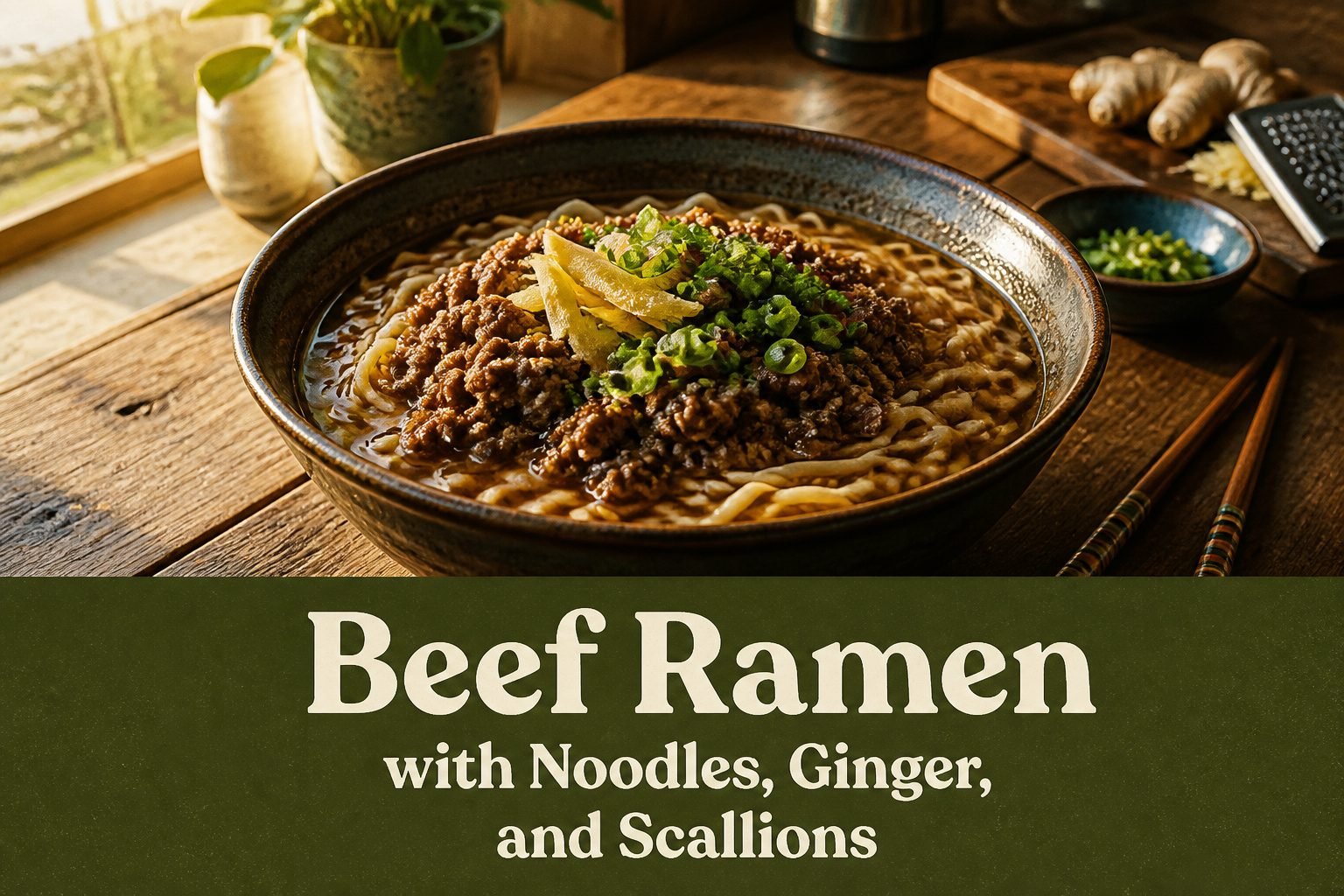
This beef ramen lands savory and deeply aromatic from ginger and hoisin, with craggy bits of ground beef clinging to noodles cooked right in the same pan.
The whole build runs 35 minutes including prep, which matters because the only thing standing between this and takeout is whether you remembered to buy the beef.
One pan, no separate noodle pot, and dinner is done before the delivery app would have found a driver.
What This Bowl Is

Beef ramen at my table means a 30-minute weeknight dinner built from what I already have, not a Saturday afternoon project with specialty shopping.
The whole thing runs about 35 minutes including prep, fills 4 bowls, and stays in one pan from start to finish.
I reach for ground beef most nights because sirloin means another stop and another price tier, though either one works if you have it on hand.
The one-pan method caught my attention early. Cooking the noodles right in the stir-fry instead of separately means one less pot to watch and one less pot to wash, which matters more than I’d like to admit on a Tuesday.
One pan, zero fuss – this beef ramen cooks the noodles in the stir-fry, making dinner quicker, easier and somehow even tastier.
— MindFood
That 15-minute cook time assumes your mise is ready, so I build in the extra 20 minutes upfront and never regret it.
Ingredients

Ground beef is what I reach for on a Tuesday, but sirloin sliced paper-thin is the move when I have ten extra minutes and a sharp knife.
The rest of the list is built from what my regular grocery store stocks.
- 1 lb ground beef (or 1 lb sirloin steak, sliced thin)
- 1 tablespoon oil
- 4 cloves garlic, minced
- 2 tablespoons fresh ginger, grated
- 4 cups beef broth
- 2 cups water
- 3 tablespoons hoisin sauce
- 3 tablespoons soy sauce
- 2 tablespoons rice vinegar
- 2 tablespoons sesame oil
- 8 oz ramen noodles (2 nests)
- 2 cups broccoli florets
- 2 carrots, sliced
- 4 green onions
- 2 hard-boiled eggs
- 1 tablespoon sesame seeds
I also keep cream cheese and oat milk on hand for the creamy variation my daughter asks for, though that is a different section entirely.
Method

- Mix hoisin, soy sauce, rice vinegar, and sesame oil in a small bowl. The sauce comes together fast, and having it ready keeps the later steps moving.
- Heat oil in a large pot or deep skillet over medium-high heat. Add the beef; ground beef needs 3–4 minutes to brown and break up, while sliced sirloin takes 2–3 minutes per side. You want color on the meat, not gray steamed bits, so let it sit and sear before stirring.
- Toss in garlic, ginger, and any chili or five-spice. Thirty seconds is all it takes to turn fragrant; the ginger goes from raw to toasted quickly, so pull it off the heat if it starts to darken.
- Pour in broth and water, then add the noodles. Simmer 2–3 minutes until they bend easily and taste tender but not mushy.
- Add broccoli and carrots; 1–2 minutes leaves them bright and just softened, still carrying some crunch. Overcooked vegetables sink a weeknight bowl.
- Ladle into bowls and top with green onions, halved eggs, and sesame seeds. Serve immediately; the noodles keep absorbing liquid as they sit.
Ground Beef or Sirloin

Ground beef is what I reach for on a Tuesday night. It browns in 3–4 minutes, needs no knife work, and runs about $5–7 per pound at my regular grocery store.
The texture breaks into craggy bits that cling to the noodles and soak up the broth, which is exactly what I want when I’m feeding the family fast.
Sirloin steak sits at $10–14 per pound and asks more of you.
It wants 2–3 minutes per side in a hot pan, a resting period, and a sharp knife to slice against the grain. Chewier, more distinct bites of beef come from the sirloin.
One approach I keep coming back to is the overnight marinade: soy sauce, garlic, and sesame oil left to work into the meat for a few hours or overnight. That step adds planning, but the depth it builds is real.
Luncheon beef exists in the ramen conversation too, though it lands like the odd cousin at a family dinner.
Canned, shelf-stable, and ready to drop straight into the bowl. I don’t keep it around, but I understand the appeal for camping trips or bare-cupboard nights.
My own line is simple. Ground beef wins for weeknights if you need dinner in under thirty minutes with one pan and no forethought.
Sirloin is worth the extra cost and the marinade when I want the bowl to feel like something I worked toward, usually a weekend lunch when the kids are at a birthday party and I can cook in quiet.
Noodle Timing

Fresh ramen noodles need just 2–3 minutes in boiling water, which is why they go in at the very end of the build.
The broth stays hot enough to finish the job once the pot comes off the burner. I pull them when they still carry a little resistance, since they will soften further in the bowl.
Soba noodles work as a swap, but they run on their own clock.
Buckwheat soba usually finishes in closer to 4 minutes, and you will want to rinse them after draining so the starch does not cloud the broth. Cook them in a separate pot so the timing stays clean.
Make-Ahead and Storage

The sauce is the only part of this bowl that improves with waiting. I mix the soy, mirin, ginger, and whatever else goes into the base up to 3 days ahead and keep it in a jar in the fridge.
The flavors settle and the sharp edges round off after a day or two in the fridge, so making it Sunday for Tuesday night works better than you might expect.
Cooking the beef and broth separately is the other half of the strategy.
Both hold fine for a couple of days refrigerated, but finished bowls do not keep because the noodles never stop drinking. By hour two you have a starchy, swollen mass instead of soup.
Assembled components last about 2 days if you must, though the texture of the meat suffers some. I combine at the last minute, ladle hot broth over, and eat immediately.
The Creamy Variation

My daughter asked for creamy ramen one Tuesday, and the only dairy in the fridge was half a block of cream cheese left from weekend bagels.
I stirred it into the hot broth off the heat, watching it melt into something that looked wrong for about thirty seconds before it smoothed out.
A splash of oat milk thinned it to a proper soup consistency, not quite a sauce and not quite a traditional broth.
Ground beef works better here than sirloin.
The finer texture lets the creamy base coat every piece, whereas sliced steak fights against it. The result is weeknight-flexible, not traditional, and my kids ask for it more often than the soy-sauce version now.
Frequently Asked Questions
What is the best beef for ramen?
Ground beef wins for weeknight bowls because it browns in 3-4 minutes and clings to noodles.
Sirloin sliced thin gives chewier, more distinct bites and rewards an overnight marinade in soy sauce, garlic, and sesame oil when you have the time.
Both work, but the choice depends on whether you need dinner fast or want deeper flavor.
How long do you cook ramen noodles?
Fresh ramen noodles need 2-3 minutes in the hot broth. Pull them while they still carry a little resistance since they soften further in the bowl.
If you swap in soba noodles, budget closer to 4 minutes in a separate pot and rinse them afterward so starch does not cloud your broth.
Can you make ramen ahead of time?
The sauce improves if mixed up to 3 days ahead and stored in the fridge.
You can also cook the beef and broth separately and refrigerate for a couple days. Do not assemble finished bowls ahead, though, the noodles never stop absorbing liquid and turn into a swollen, starchy mass within a couple hours.
Why is ramen considered unhealthy?
Instant ramen carries a reputation for high sodium and processed ingredients, but this homemade version lets you control the salt and skip the flavor packets.
Building your broth from beef stock, fresh ginger, and soy sauce means you know exactly what goes into the bowl.
What is the best seasoning for beef ramen?
The core seasoning blend is hoisin, soy sauce, rice vinegar, and sesame oil mixed before cooking.
Fresh ginger and garlic go in after the beef browns, and a pinch of five-spice or chili flakes builds warmth if you want it. Top with green onions and sesame seeds for the final layer of flavor.
What are some common mistakes when making beef ramen?
Overcrowding the pan gives you gray steamed beef instead of browned bits, so let the meat sit and sear before stirring.
Tossing ginger in too early or letting it toast too long turns it bitter, pull the pan off heat if it darkens. Overcooking the broccoli and carrots past 1-2 minutes leaves them limp instead of bright and crisp.
About The Author
