
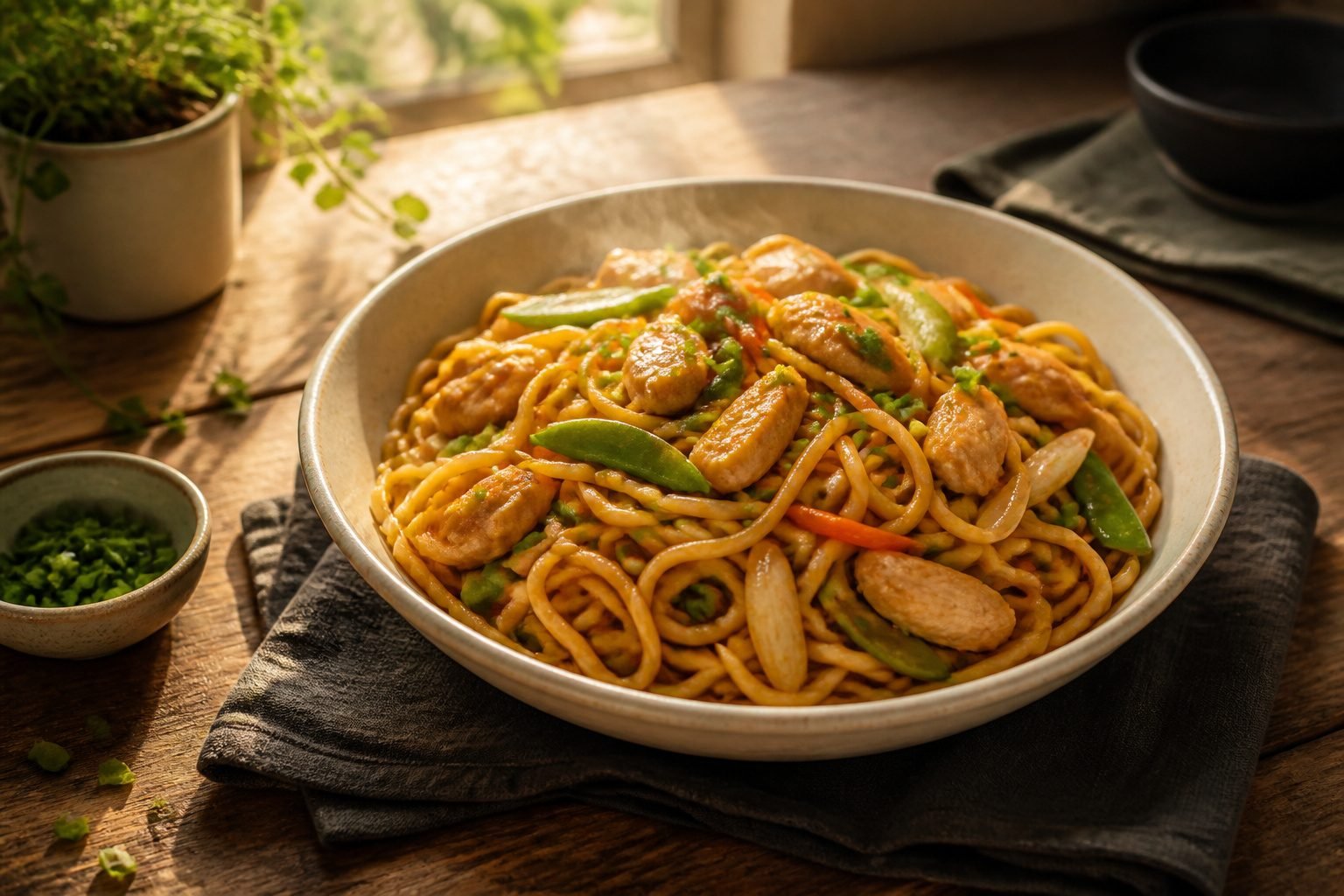
Chicken lo mein tastes like the takeout container you remember: soft egg noodles slick with savory sauce, pieces of chicken, and vegetables that still have some bite.
This version stays under 30 minutes if you mix the sauce and slice the chicken before the water boils.
The one thing that changes the outcome is the noodle itself. Fresh lo mein noodles, the kind sold refrigerated near the tofu, give a chew that dried never matches.
What Chicken Lo Mein Is

Chicken lo mein is a Chinese-American noodle dish built on soft, boiled egg noodles that get tossed with stir-fried chicken, vegetables, and a savory sauce.
The name itself comes from Cantonese: lo mein means "tossed noodles," which is exactly what happens after cooking. The noodles stay tender and absorb flavor from the sauce rather than from any frying.
The protein is sliced or diced chicken, and the vegetables are whatever holds up to quick, high heat. Carrots, broccoli, bell peppers, snow peas, mushrooms, spinach, onions, and baby corn all show up in versions worth making.
The sauce pulls from soy sauce, oyster sauce, hoisin, sesame oil, and a touch of brown sugar for that slightly sweet, full umami coating.
The dish most people confuse it with, chow mein, differs in one clear way: the noodle treatment. Chow mein noodles are pan-fried until crisp at the edges, giving a crunch that lo mein never chases.
Lo mein stays saucy and soft all the way through. Both use similar proteins and vegetables, so the choice comes down to whether you want your noodles crisp or soaked in sauce.
Recommended Products

Add a touch of Asian-inspired flavor to your favorite recipes with La Choy Chow Mein Noodles

Add a touch of Asian-inspired flavor to your favorite recipes with La Choy Chow Mein Noodles

The information below is per-pack only
Ingredients

Fresh lo mein noodles make the difference between a bowl that tastes like takeout and one that tastes like a compromise. Most grocery stores carry dried lo mein, but the refrigerated section sometimes hides the good stuff.
- 8–16 oz lo mein noodles, fresh preferred; spaghetti or ramen work if that is what you have
- 1 lb boneless skinless chicken thighs, thinly sliced into bite-size pieces; breasts are fine if thighs are not available
- 2–3 cups mixed vegetables: bell peppers, carrots, cabbage, snow peas, bean sprouts, or whatever looks fresh
- Soy sauce and dark soy sauce for the base of the sauce
- Oyster sauce for depth
- Toasted sesame oil for finishing
- Sugar to balance the salt
- Vegetable or peanut oil for the stir-fry itself
12 ounces fresh (refrigerated) or frozen lo mein noodles
That half-pound of fresh noodles feeds four, which is the portion I scale up when my kids are hungry. The chewy texture you get from fresh is the thing dried noodles never quite catch.
Recommended Products

One 11 oz P.F. Chang's Home Menu Chicken Lo Mein Noodle Bowl Frozen Meal

One 22 oz package of P.F. Chang's Home Menu Chicken Lo Mein Skillet Meal Frozen Meal

AUTHENTIC JAPANESE NOODLES - Udon Noodles are thick, Japanese noodles that can be eaten cold or hot. KA-ME’s Udon Stir Fry Noodles are perfect for traditional Japanese dishes or in an easy stir fry with vegetables and sauce.
Method

- Cut 1 pound of boneless, skinless chicken breasts into bite-sized pieces and toss them with soy sauce, cornstarch, and sesame oil. Set aside for 10 to 20 minutes while everything else gets ready.
- Whisk together the sauce: soy sauce, dark soy sauce, oyster sauce, sesame oil, and a pinch of sugar. Having this done before the pan ever heats is what keeps the stir-fry from going sideways.
- Boil lo mein noodles until al dente, drain, then rinse under cold water. Toss with a teaspoon of vegetable oil so they do not clump.
- Heat a wok or large skillet over high heat until it smokes slightly. Add half the oil, then the chicken. Stir-fry 4 to 5 minutes until cooked through, remove to a plate.
- Add the remaining oil to the same pan. Cook the vegetables until crisp-tender, usually 2 to 4 minutes total depending on what you are using.
- Return the chicken to the pan along with the noodles and sauce. Toss hard for 1 to 2 minutes until every strand is coated and the sauce turns glossy. Serve immediately.
Recommended Products

Dried egg noodles made from egg white only.


Wel Pac Lo Mein Noodles is the smoothest, quickest cooking Asian-style noodle
Yield and Storage

Leftovers keep 3 to 5 days in an airtight container in the fridge. Most recipes land on the shorter end of that range, but the noodles stay chewy enough that pushing toward day five works fine if your fridge runs cold.
Reheat in a skillet over medium-low heat with a splash of water or broth to loosen the sauce back up, or use the microwave in short bursts, stirring between each, until it is piping hot.
The skillet wins for texture; the microwave wins for speed on a Tuesday night when the kids are already asking about homework.
Most sources do not specify serving size, so here is the practical math: one pound of chicken paired with 8 to 16 ounces of dried noodles feeds about four people.
The lower noodle amount gives you a heavier chicken-to-noodle ratio, which is how I lean when I want this to read as a proper dinner rather than a pasta bowl with chicken scattered through.
Scale up or down from there based on who is at your table.
Recommended Products

Includes broccoli florets, Brussels sprouts, broccoli stalk, red cabbage, kale, carrots, snow or snap peas, Teriyaki sauce

The next time you crave Chinese food, simply reach in your cupboard for Nissin Teriyaki Vegatable Chow Mein

Includes carrot, broccoli florets, Bok Choy, cabbage, Brussels sprouts, snow or snap peas, kale ginger garlic sauce
Substitutions and Variations

Tofu takes the marinade and sauce exactly the way chicken does, pressed firm and cut into the same bite-sized pieces. The swap is straightforward: same timing, same heat, though the texture stays softer than a good sear on poultry.
Fresh lo mein noodles are ideal, but dried lo mein noodles or even spaghetti work in a pinch.
The texture turns slightly less slippery, and the sauce does not cling quite the same way. For gluten-free needs, wide rice noodles are the usual substitute, and tamari replaces both soy sauces without much fuss.
Low-sodium soy sauce is an option if you are watching salt; the flavor shifts, though how much depends on what else is in your sauce base.
Vegetables are where this recipe forgives most freely. Broccoli, mushrooms, zucchini, water chestnuts, bell peppers of any color, baby corn, carrots, whatever looks decent at the store.
Keep the total around five packed cups and the stir-fry timing stays intact. Oyster sauce can be swapped for a mushroom-based vegetarian version or a plain soy-and-brown-sugar backup if shellfish is the issue, though the depth thins out noticeably.
Recommended Products

Rich Umami Flavor – Crafted with the finest oyster extract, this sauce delivers a robust and balanced umami flavor, that is both savory and sweet, enhancing the natural flavors of meats, vegetables, and other ingredients. Its rich, savory taste adds depth and complexity to dishes, elevating everyday meals to restaurant-quality creations.

Premium Oyster Soy Sauce Blend – Extracts rich umami from fresh Hiroshima oysters combined with Honjojo soy sauce for deep, authentic flavor.

Kikkoman Sesame Oil is made from 100% real toasted sesame seeds that adds a layer of delicate sweet notes & robust nutty intensity to dressings, marinades, dips, breads, pastries, and more.
Noodle Types Compared

Fresh lo mein noodles give the chewiest, most sauce-absorbent bite, which is why they sit at the top of my list when I can find them.
Look in the refrigerated section near tofu and wonton wrappers; Twin Marquis and Ka-Me are the brands I watch for. They come pre-cooked, so they hit the pan straight from the package after a quick rinse.
| Attribute | Fresh Lo Mein | Dried Lo Mein | Spaghetti |
|---|---|---|---|
| Texture | Slippery, chewy, bouncy | Chewy, less elastic | Lacks egg noodle character |
| Availability | Refrigerated Asian section; sometimes freezer | Asian foods aisle or online | Widely available |
| Prep needed | Rinse in hot water, separate strands | Boil until al dente, rinse, toss with sesame oil | Boil until al dente |
| Cook time | Shortest: ready for the pan | Longer: full boil required | Longer: full boil required |
Dried lo mein noodles work perfectly well, though they need that extra boiling step and a drizzle of toasted sesame oil afterward to keep them from clumping.
Spaghetti is the honest fallback: it will carry the sauce and vegetables, but the texture stays one-dimensional compared with egg noodles. If your store stocks fresh yakisoba or Chinese egg noodles, those swap in more convincingly than pasta ever will.
Recommended Products

Thick restaurant style Chow Mein noodles in Teriyaki Beef Flavor

Best Of Thailand Noodles

Asian style chow mein stir-fry noodles
What Makes the Sauce Work

The sauce in chicken lo mein looks simple until you break it apart. Light soy sauce carries the salt and umami base, the part your tongue registers first.
Dark soy sauce thickens that with color and a slight sweetness, the difference between a pale noodle and one that looks like it came from a takeout container.
Use both if you can; the dark one is not just for show.
Oyster sauce gives the body, a depth that reads as savory rather than explicitly fishy.
A cheap bottle turns thin and overly sweet, so this is where the grocery store aisle matters. Lee Kum Kee or Kikkoman are the ones to reach for.
Sesame oil finishes it, but only if the bottle says toasted or dark. The untoasted kind is for cooking, not for flavoring, and tipping the wrong one in at the end wastes everything underneath it.
A little sugar balances the salt, brown or white, just enough to round the edges without reading as sweet. Some cooks add hoisin and some leave it out, so you can decide based on how sweet you want the sauce.
I keep it optional; the lo mein works either way, though hoisin pushes it toward something closer to chow mein territory.
Recommended Products
Dried egg noodles made from egg white only

One 11 oz P.F. Chang's Home Menu Dan Dan Noodle Bowl Frozen Meal

Frequently Asked Questions
Recommended Products

16 oz organic wide egg noodles
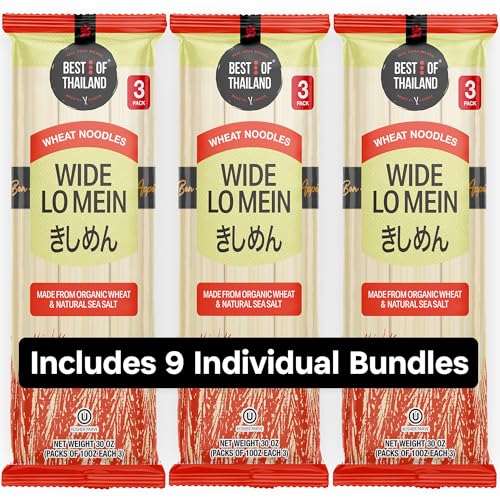
Best Of Thailand Noodles

Simple & Versatile Meal Base: Blue Dragon Cantonese Egg Noodles offer a smooth and balanced foundation for your favorite Asian-inspired meals; Made with wheat flour and egg, these Chinese noodles cook quickly and pair effortlessly with sauces, vegetables, and proteins to create a delicious meal at any time of day
What is chicken lo mein?
Chicken lo mein is a Chinese-American noodle dish made with soft, boiled egg noodles tossed with stir-fried chicken, vegetables, and a savory sauce.
The name comes from Cantonese: lo mein means ‘tossed noodles.’ The noodles stay tender and absorb flavor from the sauce rather than from any frying.
What’s the difference between lo mein and chow mein?
Lo mein uses soft, boiled noodles that stay saucy and tender all the way through, while chow mein noodles are pan-fried until crisp at the edges.
Both dishes use similar proteins and vegetables, so the choice comes down to whether you want your noodles crisp or soaked in sauce.
Can I use different vegetables in chicken lo mein?
Yes, almost any vegetable that holds up to quick, high heat works here.
Bell peppers, carrots, cabbage, snow peas, bean sprouts, broccoli, mushrooms, zucchini, water chestnuts, baby corn, and onions all fit. Keep the total around five packed cups and the stir-fry timing stays intact.
What sauce is used in chicken lo mein?
The sauce builds from soy sauce and dark soy sauce for the base, oyster sauce for depth, toasted sesame oil for finishing, and a touch of sugar to balance the salt.
Some versions add hoisin, though that pushes the flavor closer to chow mein territory. Use both light and dark soy sauce if you can; the dark one adds color and slight sweetness.
What’s the secret to flavorful lo mein?
Fresh lo mein noodles make the biggest difference, giving a chewy, sauce-absorbent texture that dried noodles never quite match.
Beyond that, prep the sauce before the pan heats, use toasted (not untoasted) sesame oil, and choose a decent oyster sauce like Lee Kum Kee or Kikkoman rather than a thin, overly sweet bottle.
What is an authentic Chinese chicken lo mein recipe?
Authenticity here is tricky: chicken lo mein as most Americans know it is Chinese-American rather than traditional Cantonese.
The version worth making at home uses fresh egg noodles, chicken thighs sliced thin, a mix of quick-cooked vegetables, and a sauce built on soy sauce, oyster sauce, and sesame oil.
The technique matters more than exact ingredients: high heat, quick cooking, and tossing everything together while hot.
What ingredients do I need for lo mein?
You need lo mein noodles (fresh preferred), about 1 pound of boneless skinless chicken thighs or breasts, 2 to 3 cups of mixed vegetables, soy sauce and dark soy sauce, oyster sauce, toasted sesame oil, sugar, and vegetable or peanut oil for cooking.
Cornstarch helps the chicken take the marinade, and a splash of water or broth is useful for reheating leftovers.
About The Author
