
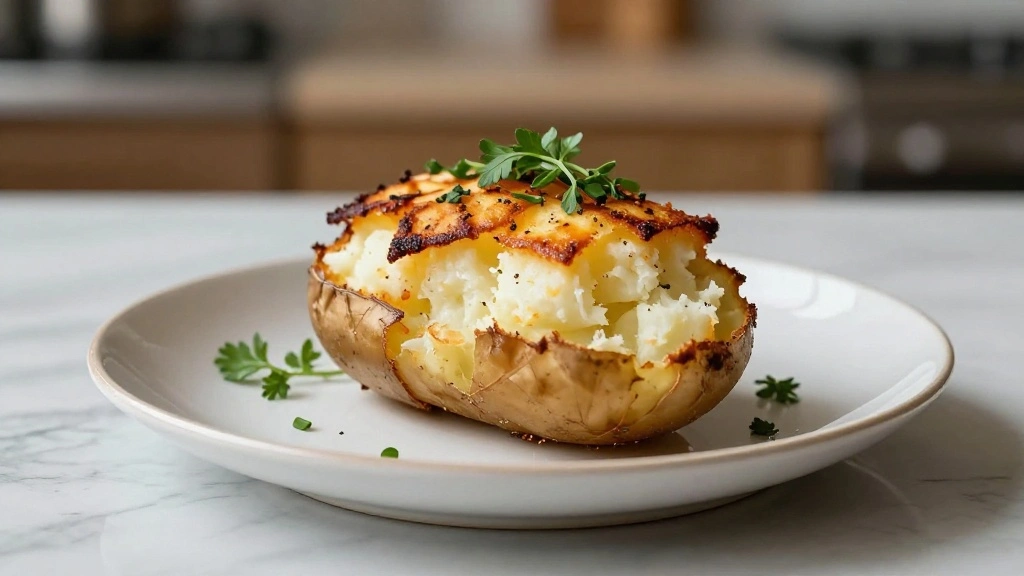
There’s something uniquely comforting about a perfectly baked potato, with its crispy skin and fluffy inside.
This recipe takes a classic dish and elevates it with simple techniques that ensure every bite is a delight.
Whether you’re enjoying it as a side dish or the main event, a well-baked potato is a testament to the beauty of simplicity in cooking.
I first encountered this recipe during a chilly autumn evening, and it has since become my go-to comfort food in colder seasons.
The key lies in achieving the perfect balance between the crunchy outer layer and the soft, steaming interior.
Join me on this culinary journey to master the art of the perfect baked potato.
The History and Cultural Significance
• Perfect Baked Potato traces its origins to the Andes in South America, where it was originally cultivated by the Incas.
• The dish evolved over decades as it spread to Europe and North America, with variations in baking techniques and toppings.
• In American culture, this dish traditionally appears at barbecues and family gatherings, symbolizing comfort and hospitality.
• While many variations exist across different regions, the authentic version maintains a crispy skin that sets it apart from imitations.
Recipe Overview
Nutritional Information (per serving)
Essential Equipment Guide
Oven: An essential tool for achieving the perfect crispy skin and evenly cooked interior. A convection oven works best but a regular oven set at the right temperature will also yield great results.
Wire Rack: Elevating the potato on a wire rack ensures even air circulation, preventing soggy bottoms. Alternatives include a perforated baking sheet.
Skewer: Useful for checking doneness and allowing steam to escape, preventing the potato from bursting during baking. A thin metal skewer works best.
Ingredients
For the Base
|
|
| Amount | Ingredient | Notes |
|---|---|---|
| 4 large | russet potatoes | scrubbed and dried for best results |
| 2 tablespoons | olive oil | adds richness and helps crisp skin |
Seasonings
| Amount | Ingredient | Notes |
|---|---|---|
| 1 tablespoon | sea salt | enhances flavor and aids in achieving crispy skin |
Preparation Methods
Scrubbing and Drying: Thoroughly clean and dry the potatoes to remove dirt and ensure oil adheres properly. This is crucial for achieving a crispy skin.
Pricking Potatoes: Use a skewer or fork to prick holes in the potatoes, allowing steam to escape and preventing them from bursting during baking.
Oil and Salt Rub: Rub each potato with olive oil and sea salt to help the skin crisp up and add flavor. Ensure even coverage for consistent results.
Step 1: Preheat the Oven

Preheat your oven to 425°F (220°C).
This high temperature is essential for crisp skin.
Ensure your oven rack is in the middle position.
This allows for even heating and circulation.
Step 2: Prepare the Potatoes

Scrub the potatoes thoroughly under cold water.
Dry them completely with a clean kitchen towel.
Prick each potato several times with a fork.
This allows steam to escape during baking.
Step 3: Oil and Season the Potatoes
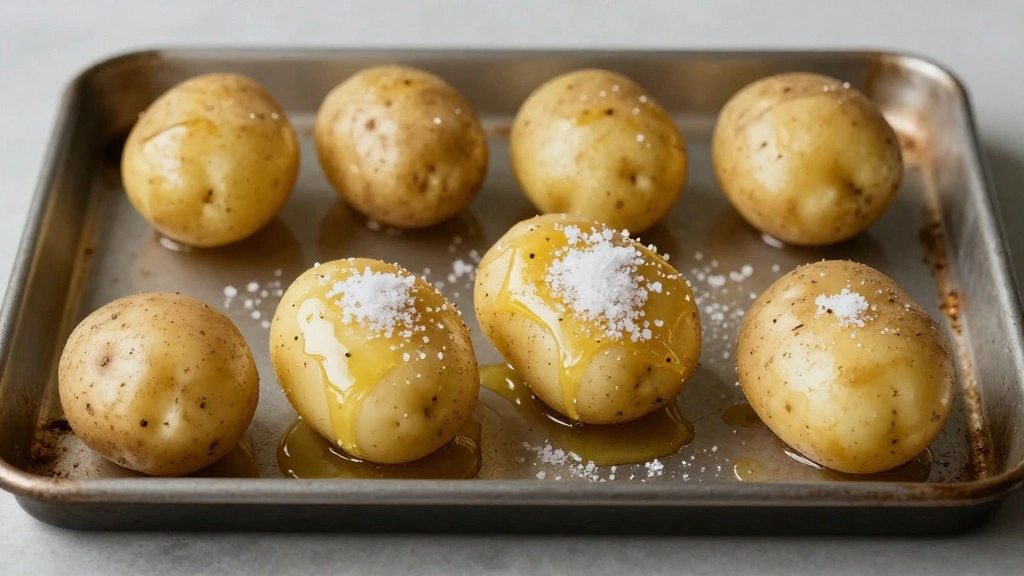
Drizzle olive oil over each potato.
Rub the oil on all sides using your hands.
Sprinkle sea salt evenly over the potatoes.
Ensure the entire surface is coated for maximum crispiness.
Step 4: Arrange on a Wire Rack
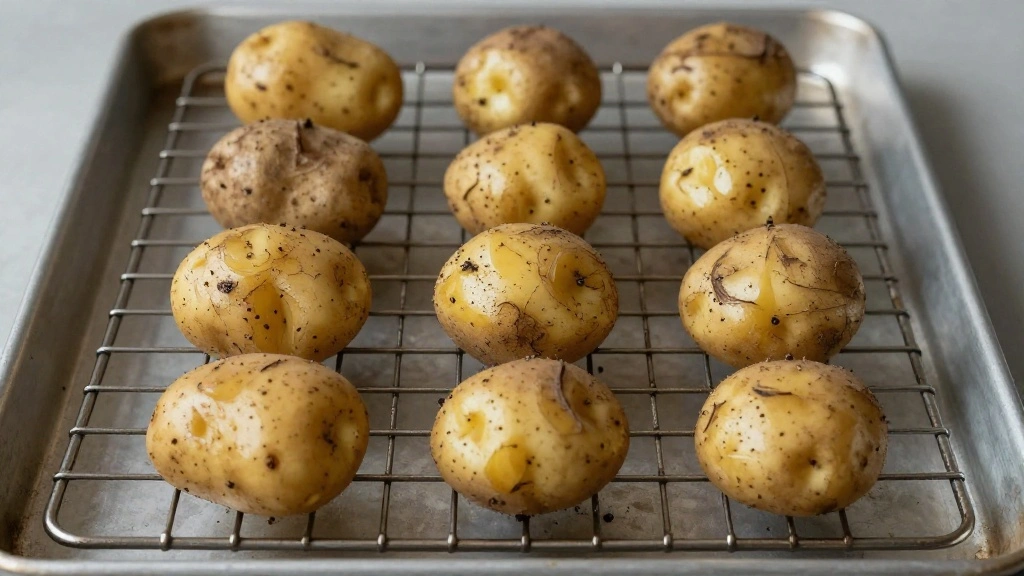
Place a wire rack inside a baking sheet.
Arrange the potatoes on the rack.
Ensure they are not touching each other.
This setup promotes even cooking and crispy skin.
Step 5: Bake the Potatoes
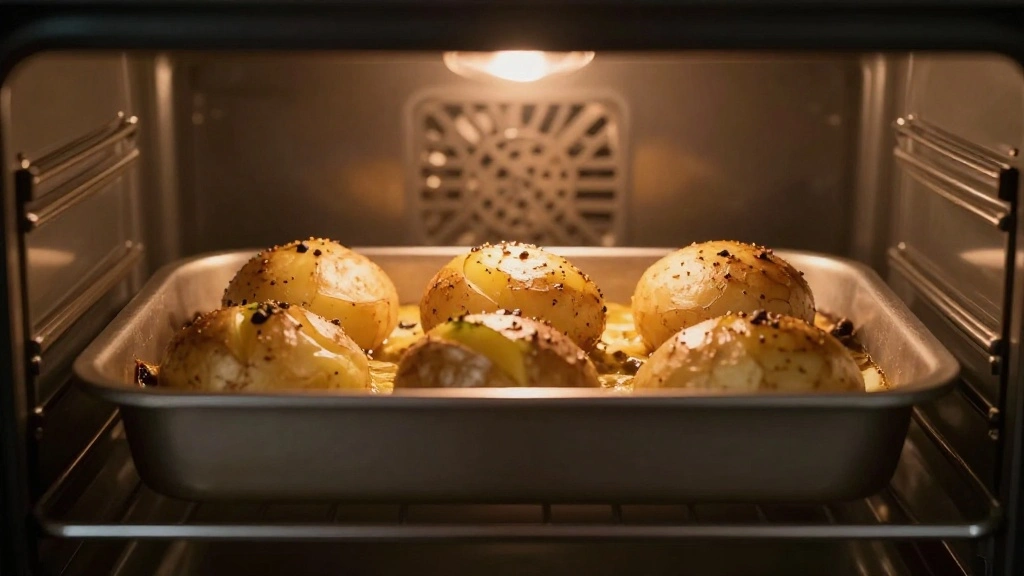
Place the baking sheet in the preheated oven.
Bake for about 45-60 minutes.
Check for doneness by inserting a skewer.
The skewer should slide in without resistance.
Step 6: Test for Doneness
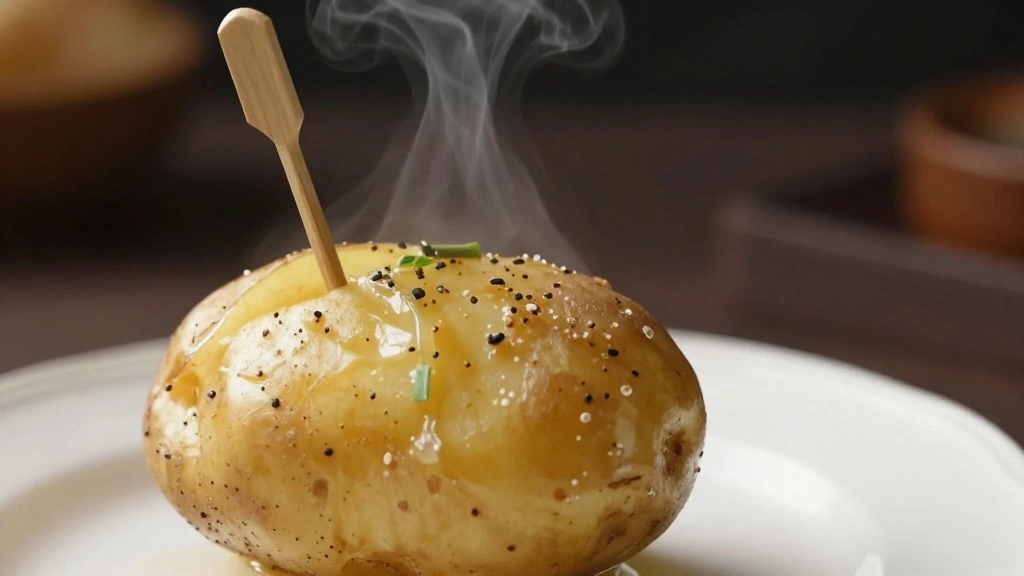
Remove one potato and insert a skewer.
It should glide in easily if done.
If there's resistance, return to the oven.
Check every 5 minutes until fully cooked.
Step 7: Rest the Potatoes
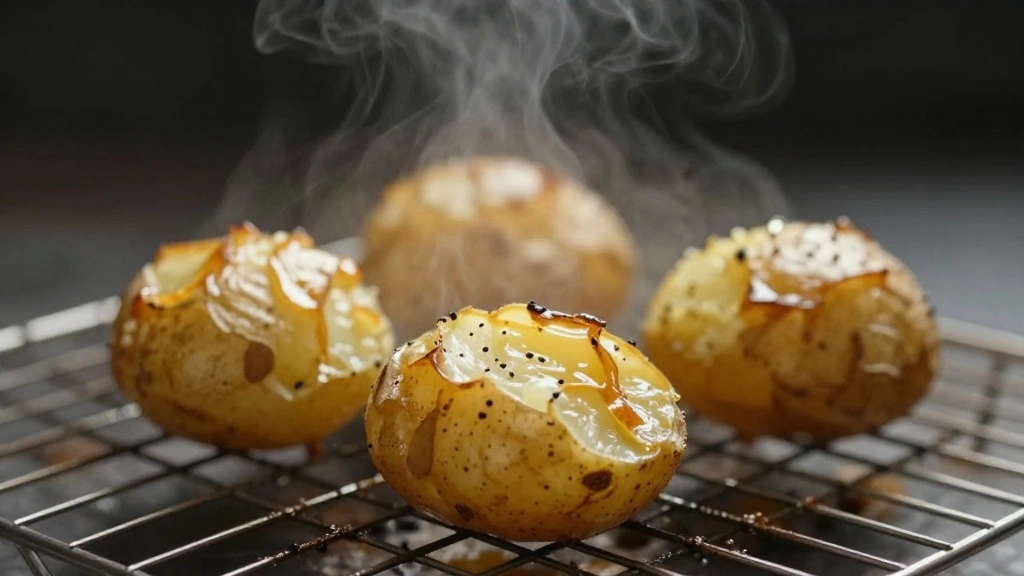
Remove the potatoes from the oven.
Let them rest for about 5 minutes.
This allows the steam to settle.
Ensures a fluffy interior when cut open.
Step 8: Serve the Potatoes
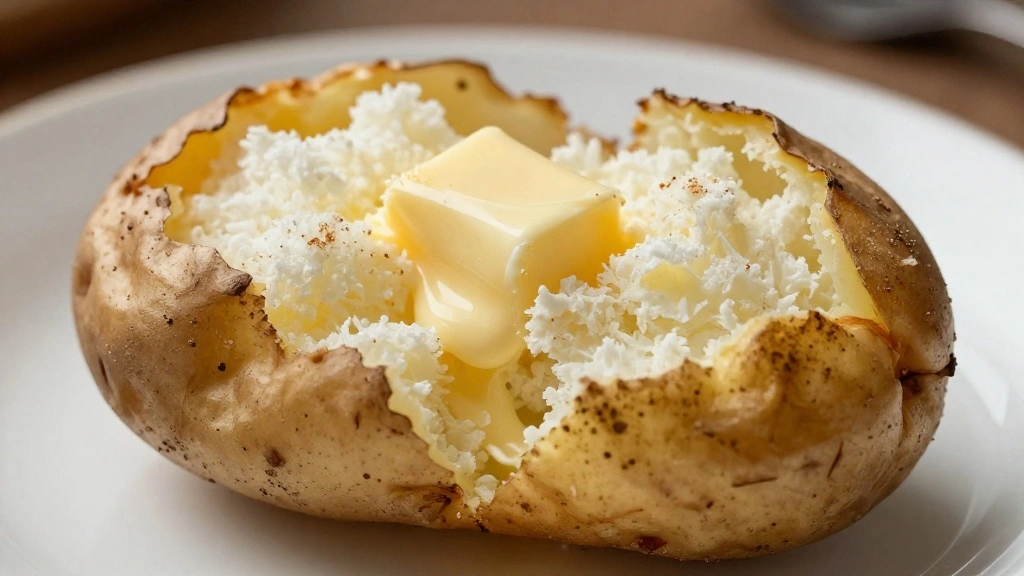
Cut a slit down the center of each potato.
Use a fork to fluff the interior.
Add your favorite toppings, if desired.
Serve immediately for best texture and flavor.
Critical Timing and Temperature Guide
Preheating the Oven: Ensure the oven reaches 425°F (220°C) before placing the potatoes inside. This temperature is crucial for crispy skin. Avoid opening the oven door frequently as it lowers the temperature.
Baking Duration: Bake for 45-60 minutes, depending on potato size. Larger potatoes may require additional time. Test doneness with a skewer for best results.
Resting Period: Allow potatoes to rest for 5 minutes post-baking. This helps achieve a consistent fluffy texture inside.
Pro Tips for Perfect Baked Potato
• Ingredient Selection: Choose russet potatoes for their high starch content, which results in a fluffy interior.
• Preparation Secret: Dry potatoes thoroughly after washing. Moisture on the skin can prevent crisping.
• Temperature Management: Always preheat your oven for at least 10-15 minutes before baking.
• Texture Enhancement: Use a wire rack to elevate potatoes, ensuring even heat distribution and a crispy bottom.
• Flavor Layering: Rub with olive oil and sea salt to create a delicious crust that enhances the potato's natural flavor.
• Make-Ahead Strategies: Partially bake potatoes for 30 minutes, then finish baking just before serving.
• Restaurant-Quality Finishing Touches: Brush melted butter on the skin post-baking for a glossy finish.
• Equipment Optimization: If a wire rack isn't available, use a perforated baking sheet for similar results.
Troubleshooting Common Issues
• Skin Not Crispy: Ensure potatoes are completely dry before baking and oven is preheated to the correct temperature. If skin remains soft, increase baking time slightly.
• Interior Too Dense: This is often due to underbaking. Test with a skewer and bake until it slides in easily.
• Potatoes Burst: Prick potatoes adequately to allow steam to escape. If they burst, reduce oven temperature slightly next time.
• Flavor Lacking: Be generous with olive oil and sea salt. Insufficient seasoning can result in bland potatoes.
• Overcooked Skins: If skin is too hard, reduce oven temperature by 25°F after 30 minutes of baking.
Variations and Regional Differences
• American Style: Often topped with butter, sour cream, and chives. This variation focuses on simple, rich flavors.
• British Jacket Potato: Typically served with baked beans and cheese, offering a hearty, filling meal.
• French Variation: Known as "Pommes de Terre au Four" and often accompanied by crème fraîche and herbs.
• Italian-Inspired: Topped with olive oil, garlic, and rosemary for a Mediterranean twist.
Food Science Behind the Recipe
• Maillard Reaction: The high baking temperature promotes the Maillard reaction, which is responsible for the crispy, golden skin.
• Starch Gelatinization: The heat causes starches in the potato to gelatinize, creating a fluffy texture inside.
• Heat Conduction: Elevating potatoes on a wire rack allows even heat distribution, preventing soggy bottoms.
Frequently Asked Questions
What's the most common mistake people make when preparing baked potatoes? The most common mistake is not drying the potatoes thoroughly, which results in a less crispy skin.
Can I use a different type of potato? Yes, but russet potatoes are preferred due to their high starch content and fluffy texture.
How can I speed up the baking process? You can microwave the potatoes for 5-10 minutes before baking to reduce oven time.
What's the best way to store leftover baked potatoes? Store in an airtight container in the refrigerator for up to 3 days.
Can I bake potatoes without oil? Yes, but the skin may not be as crispy without the oil.
How do I know when the potatoes are done? Insert a skewer or fork; it should slide in easily if the potato is fully cooked.
What toppings go well with baked potatoes? Popular toppings include butter, sour cream, cheese, bacon bits, and chives.
Serving and Presentation Guide
• Traditional Presentation: Serve the baked potato on a plate, sliced open, with a pat of butter melting into the fluffy interior.
• Family Style: Place a selection of toppings in small bowls, allowing guests to customize their own potatoes.
• Gourmet Presentation: Slice the top off the potato and scoop out some interior, refilling with a creamy filling before topping with garnishes.
• Casual BBQ Style: Wrap baked potatoes in foil and serve straight from the grill, perfect for outdoor gatherings.
Conclusion

Mastering the perfect baked potato is a rewarding culinary skill that transforms a simple ingredient into a delightful dish.
With these tips and techniques, you'll achieve a crispy, golden skin and a light, fluffy interior every time.
I encourage you to try this recipe and enjoy the delicious results with family and friends.
Happy baking!
About The Author
